

Photo Scanning
Archival Grade Service with a Personal Touch
100,000+
130+
locations
90,000+
converted per year
115+
employees
5 million
scanned per year
Our photo scanning team digitizes over four million images every year. We are not a one-size-fits-all (or fits in a box) service. Our unique process and technology allows us to keep it simple and affordable for basic projects, or customized and nuanced for clients with complex or technical requirements.
Whether you have 100 photos or 100,000, our family-run business will treat your project like our own, and we will make the process easy for you at every step.

Our Mission
“By making the hard work of digitizing and sharing easy for our clients, we will preserve our world’s history before old formats fade and family stories are lost to time. Our ultimate goal is to make your best memories EverPresent in your life.”
– Eric, Jennifer & Winston






3 easy ways to work with us

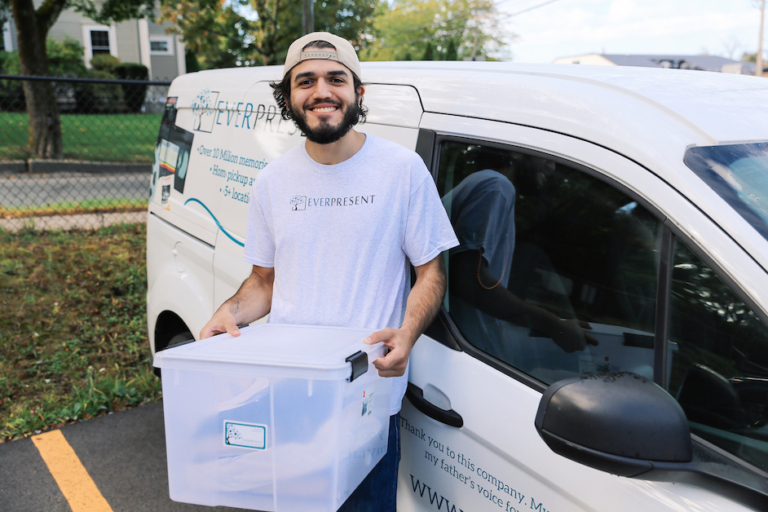
HOME PICKUPS
Too many boxes to move on your own? Complimentary home and office pickups are offered throughout the East Coast for projects over $300.
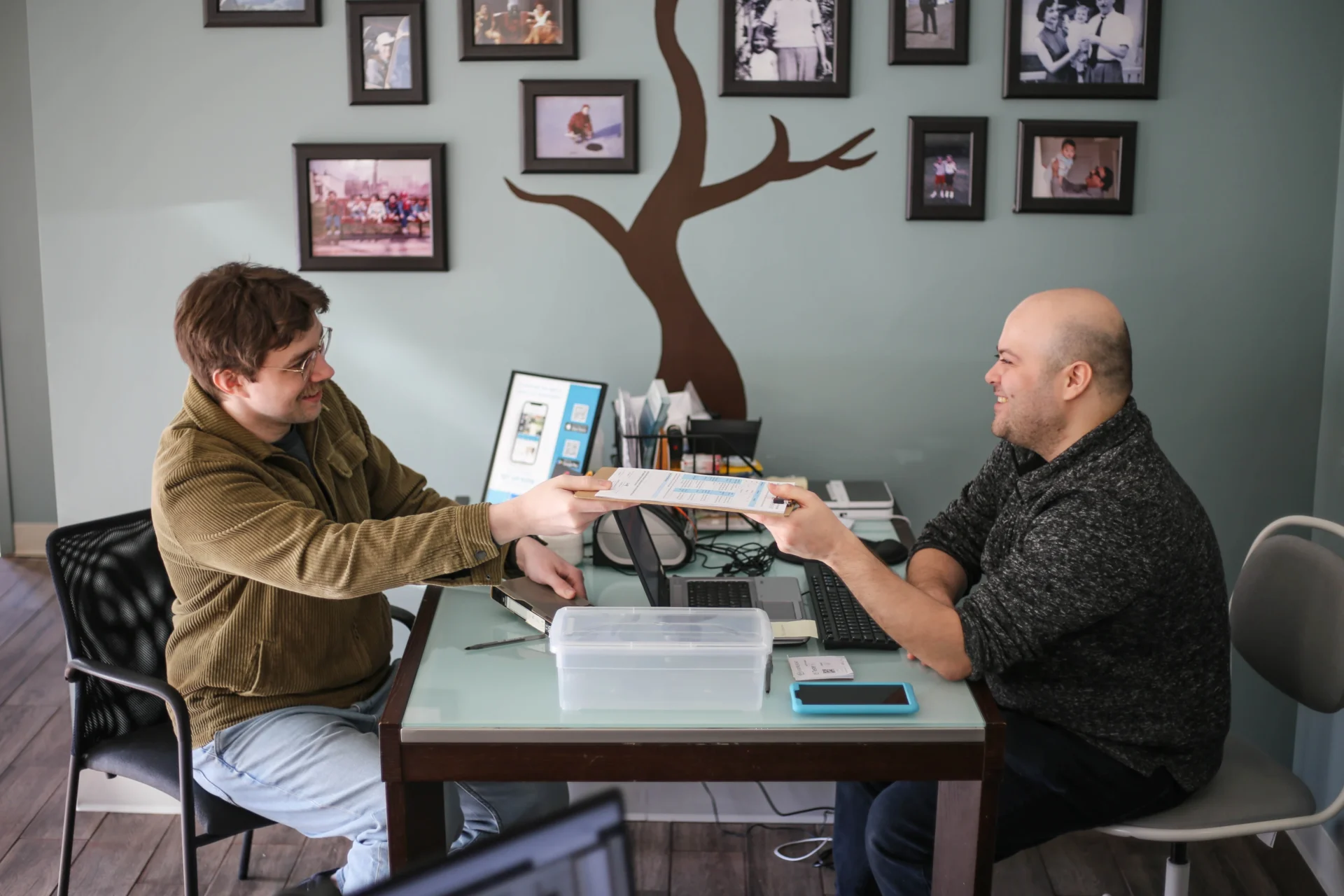
LOCAL DROP OFFS
130+ locations available for convenient drop-off. See which store is closest to you. Our drivers personally transport projects to our local lab for digitizing.
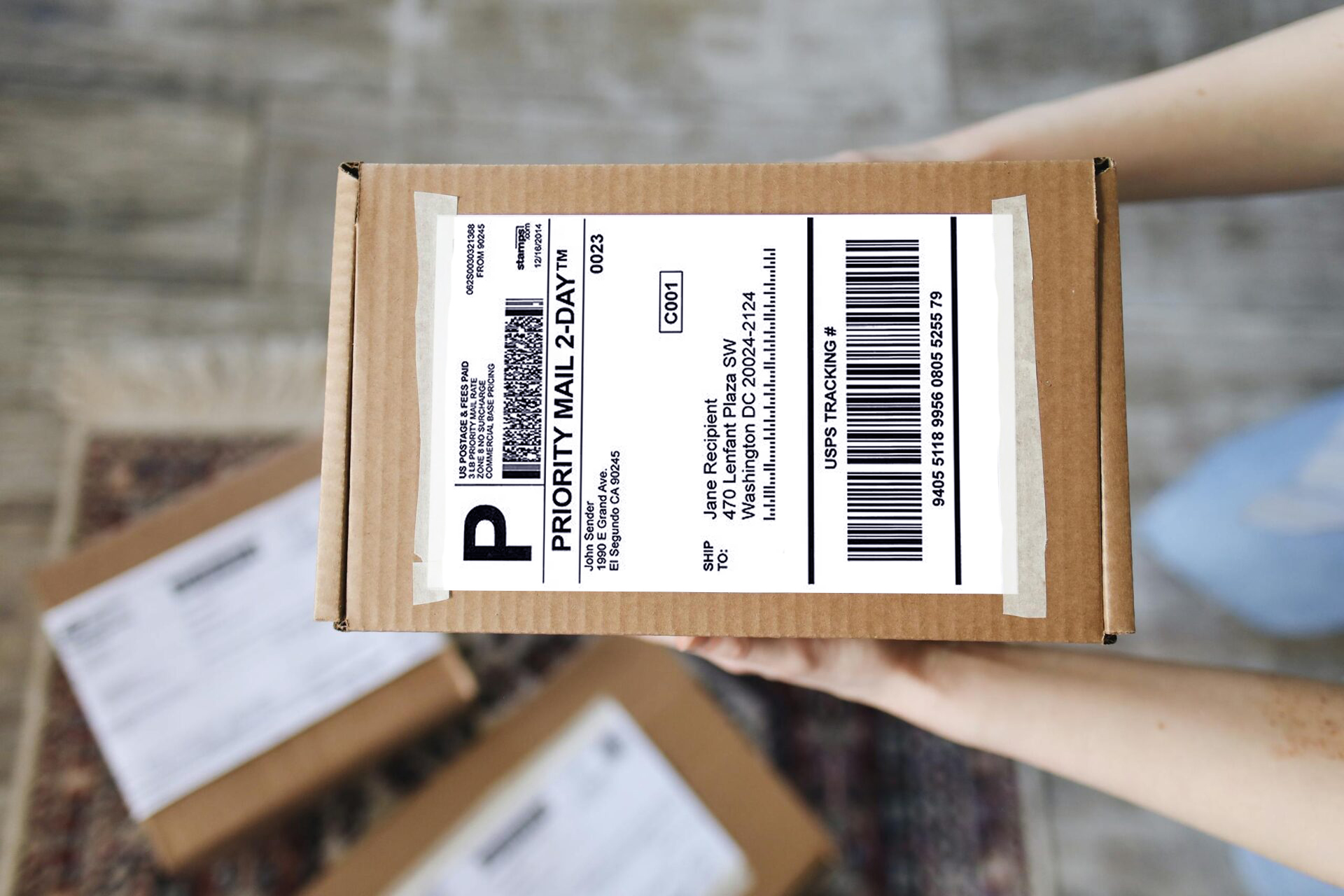
FREE SHIPPING
We accept mail-in orders from across the U.S. We’ll email a pre-paid UPS label or apply a shipping credit if you ship on your own.
There’s no prep required to get the ball rolling
A lot of folks worry they have to organize, count, bag and tag their photos before reaching out. You don’t! We can take care of all of that. And we’d love to hear from you even if all you’re looking for at the moment is some advice.
Why Choose Our Photo scanning service
TRUST
Over 100 million memories preserved, 30+ years experience, 115+ expert technicians. Alarmed, camera-monitored, US-based, high-tech labs. Human quality control process. Advanced barcode tracking to keep you updated by email and text.
VALUE
The size of our company allows us to provide more for less. We’ve invested in the best image scanning technology so you can benefit from high-resolution DPI, a hybrid of AI enhancements and human quality checks, organized folders and transcribed captions.
SECURE
You should NOT have to risk your family memories getting lost or damaged in the mail. We run a private logistics network between our clients homes, our 130+ local stores and our high tech labs nationwide. Your images will be binned and barcoded, and we’ll provide you with updates throughout.
RESPECT
No upfront payments and no rushed decisions. We never ask you to do work to make our job easier. Feel free to send your collections in their original envelopes, albums or boxes. We’ll count them for you, provide a no-obligation estimate, and keep everything in order.
We Digitize Every Photo Format
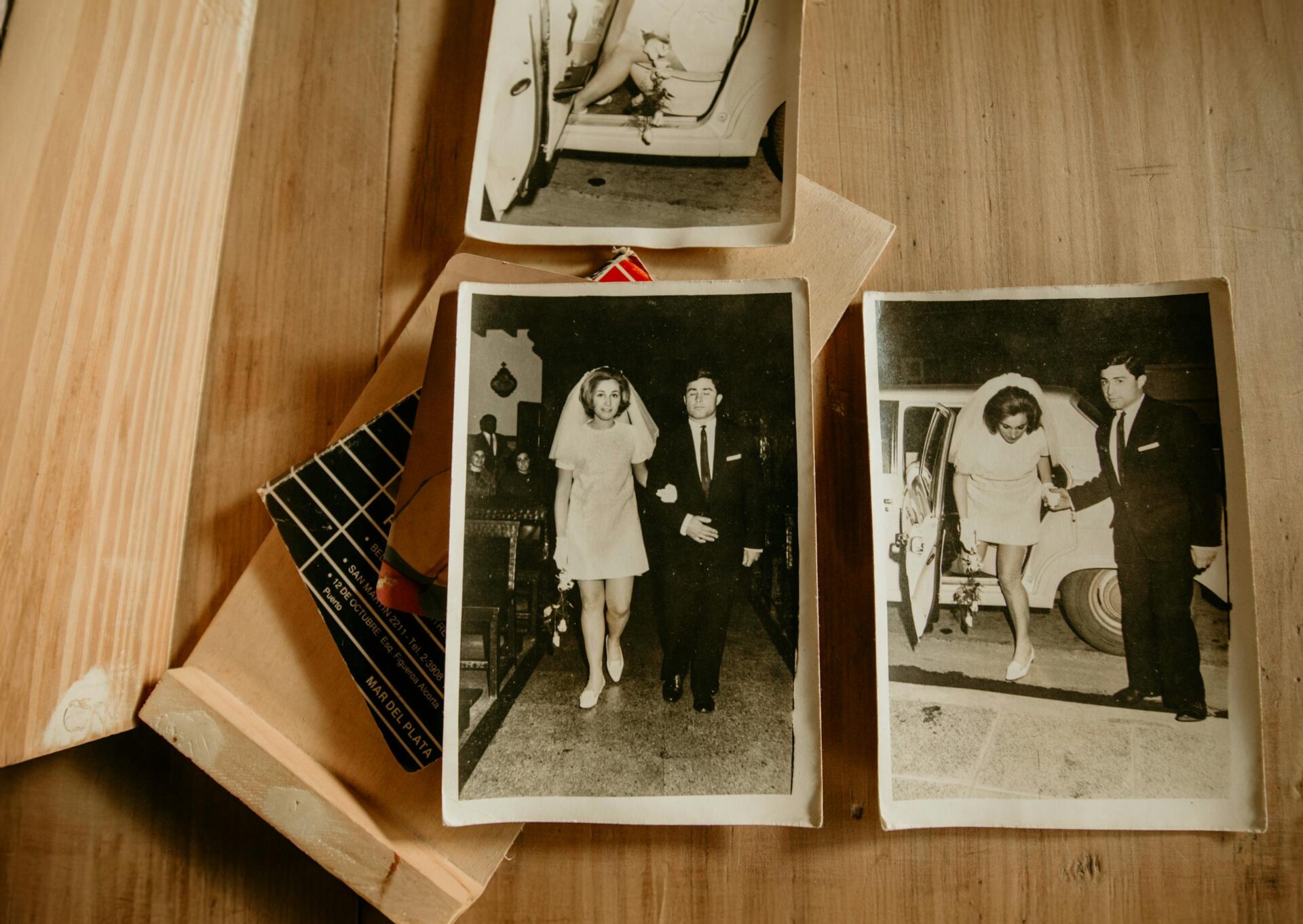
We digitize photos in standard sizes up to “8×10”, oversized items & frames, memory cards, letters, newspapers and more – all in house. You do not have to organize your photos before sending them to us. We digitize photos in envelopes, shoeboxes, bags – however you have them – and return them the same way. Our team can also work with photos in albums and old scrapbooks.
Photo Scanning Pricing
Standard Photo Prints
$0.68 for scans 200+First 200 scans (up to 8.5″ x 11″): $0.98
This 30% bulk discount will be applied automatically!
INCLUDED:
A $50 service fee applies to all orders. This service fee provides for safe handling procedures including: intake, item coding, physical & digital storage, quality checks by senior technicians and packaging.
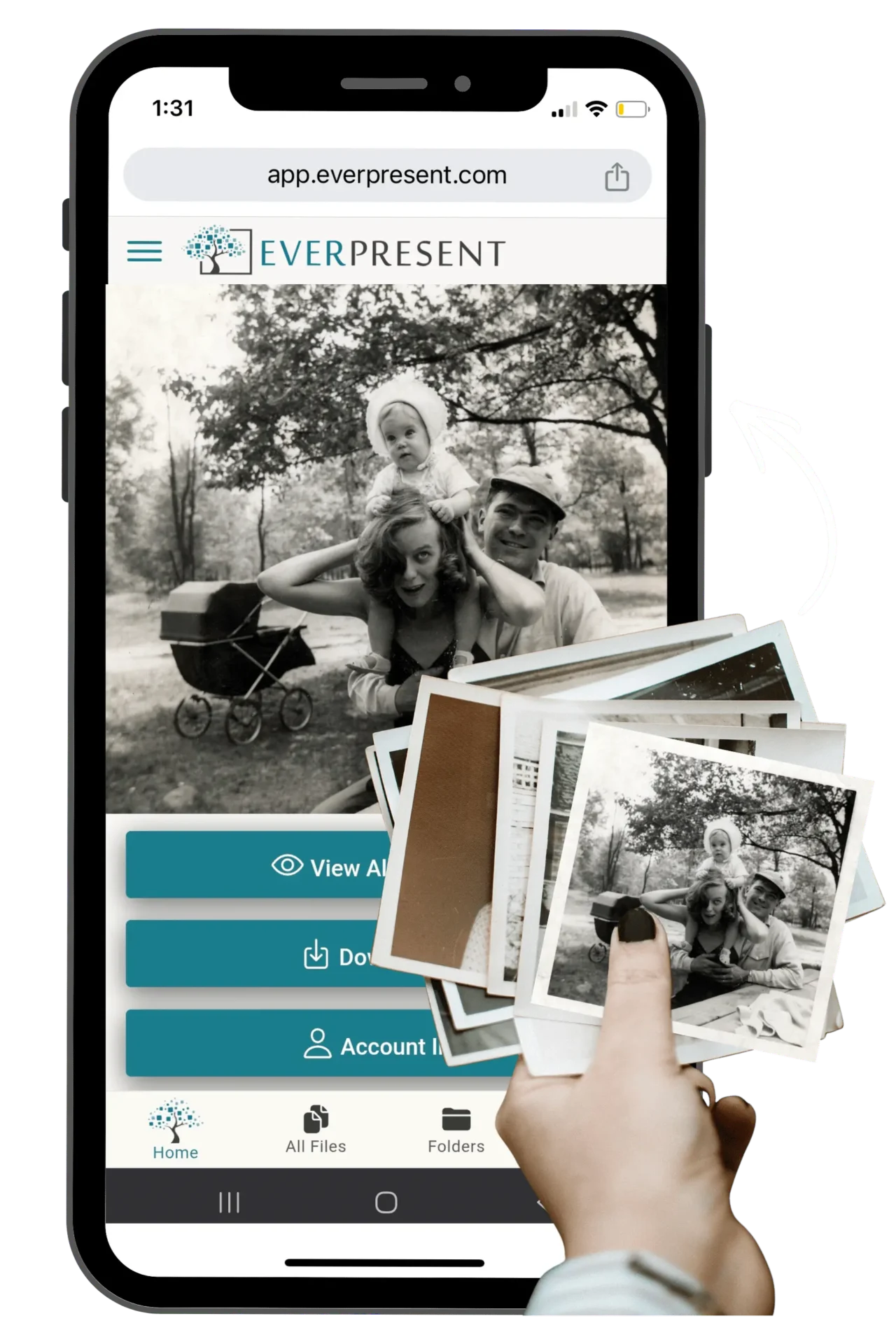
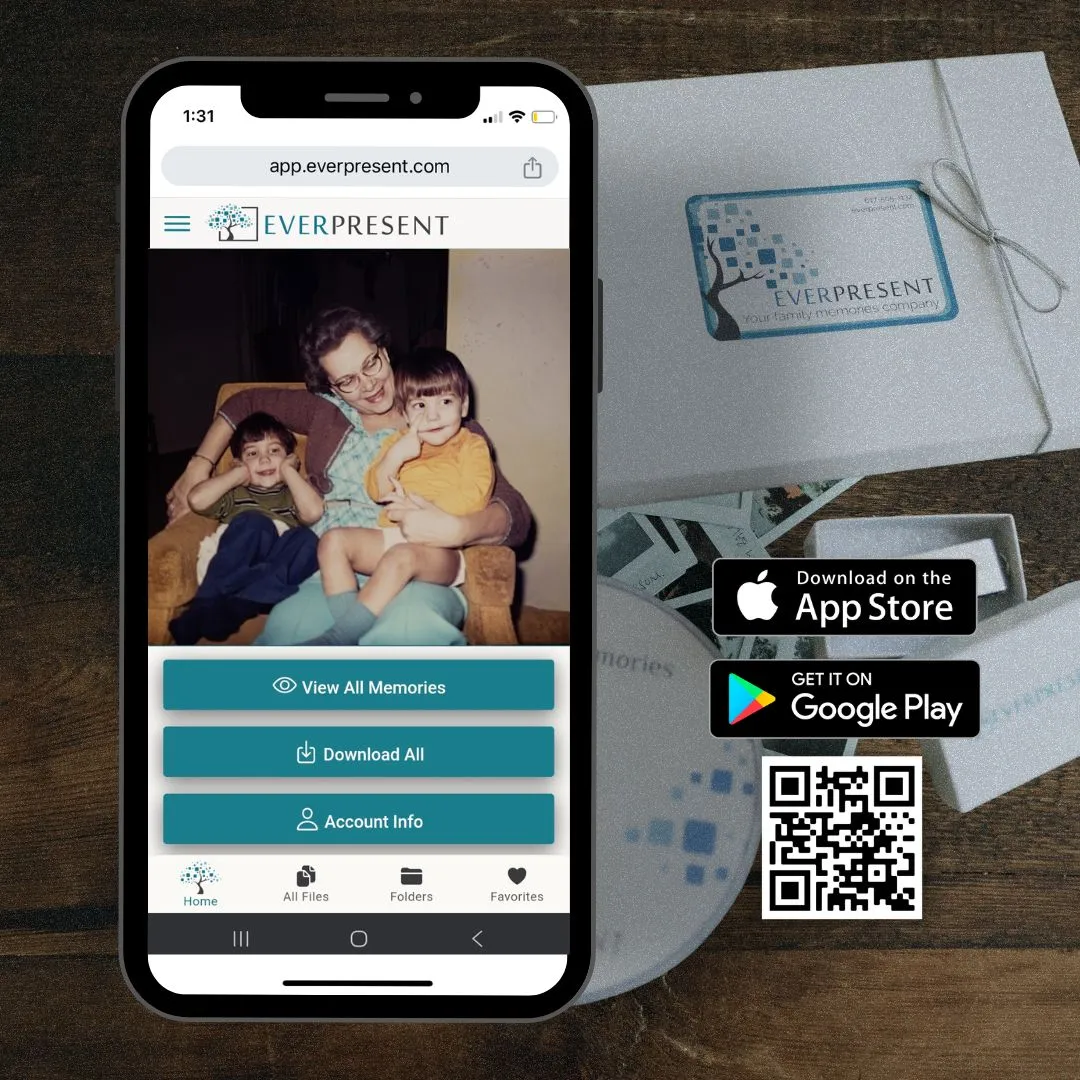
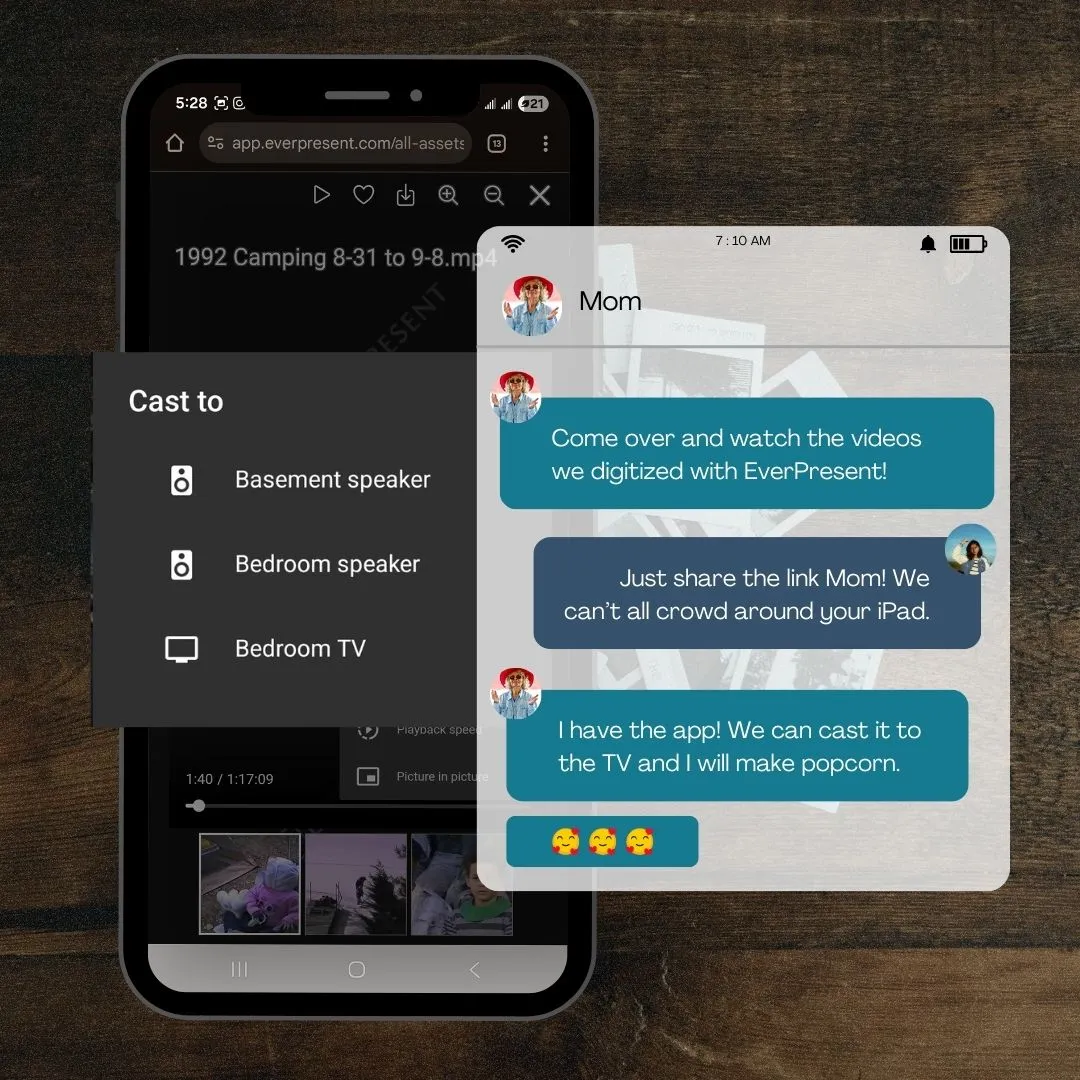
Our App
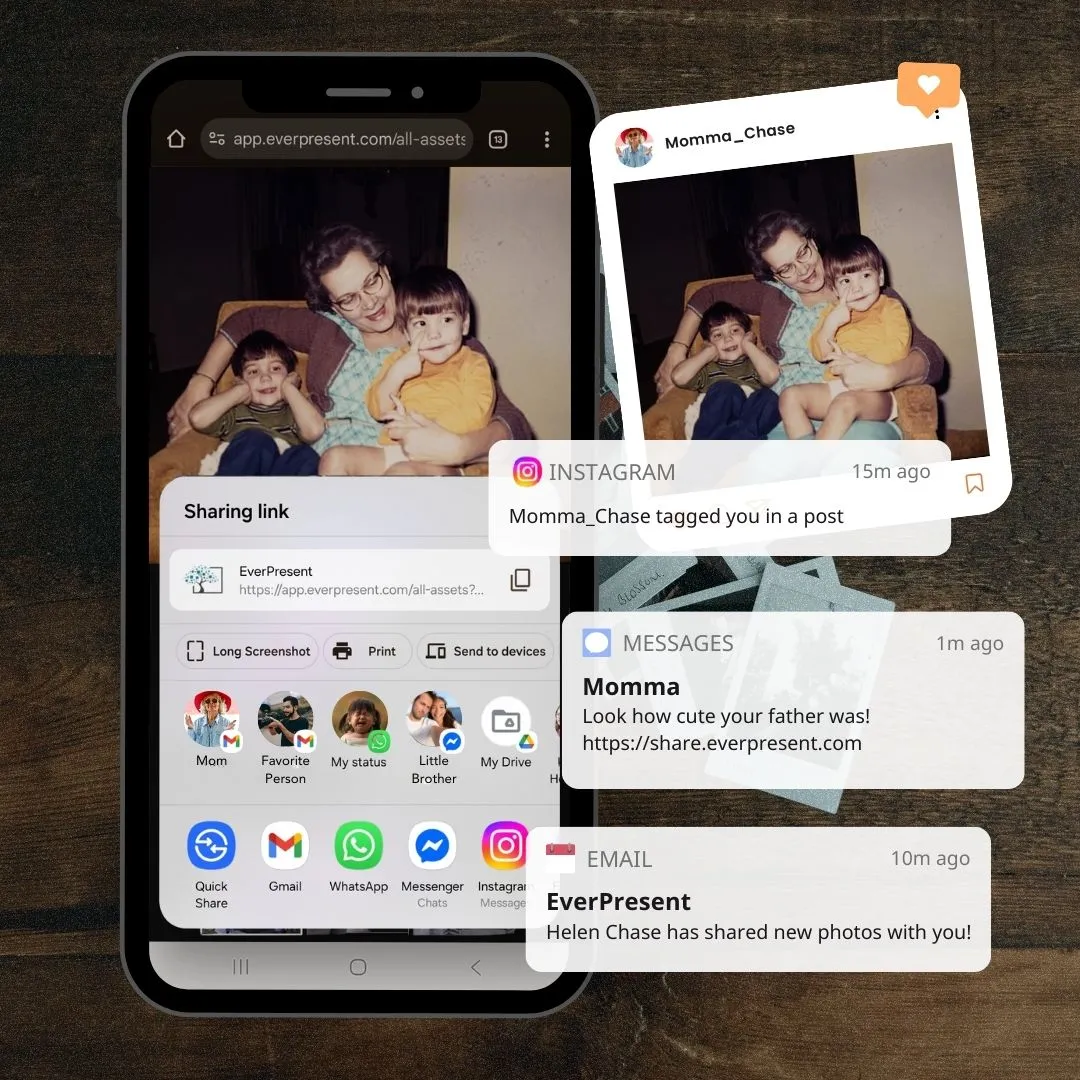
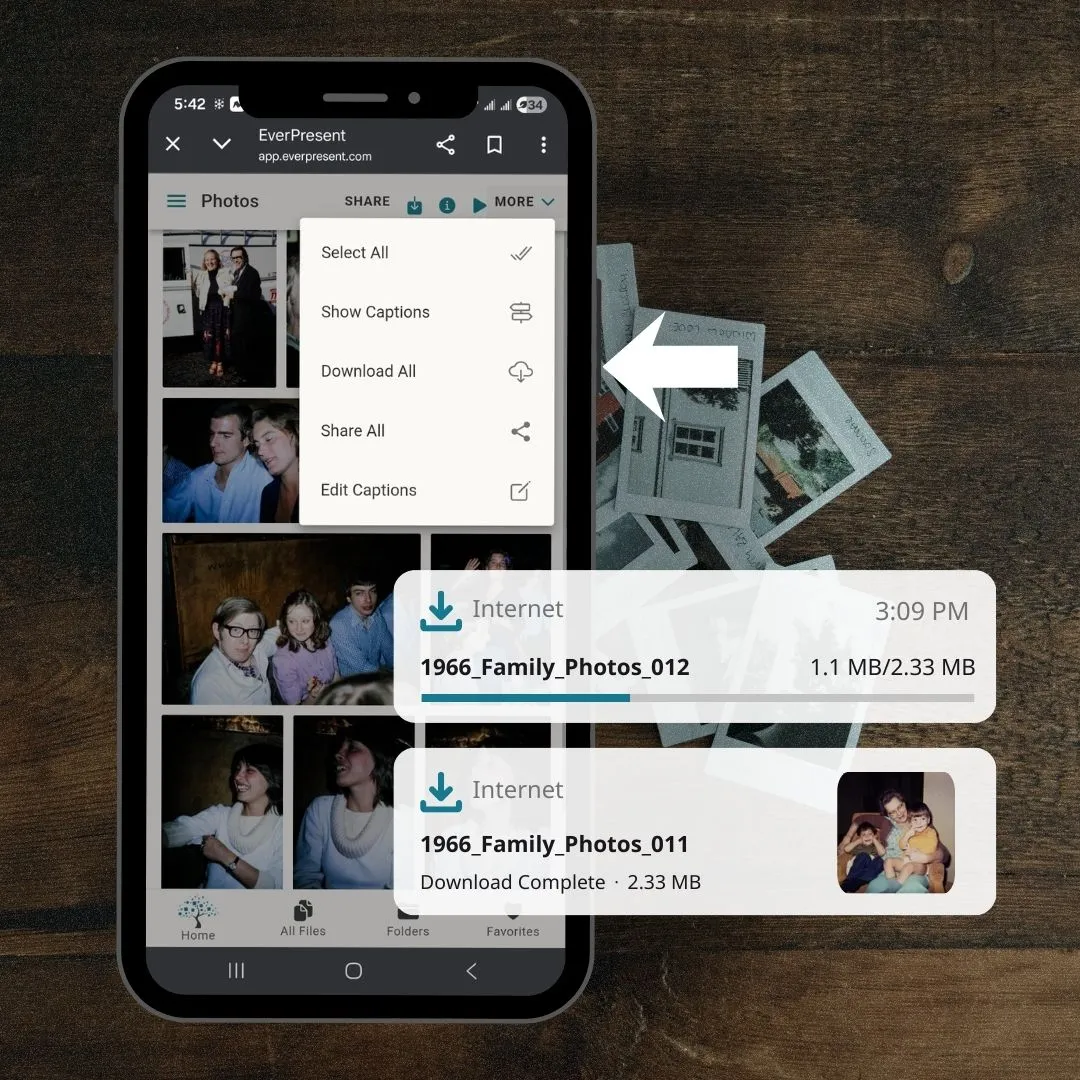
Stop Searching. Start Sharing.

our aI philosophy
Across all analog formats we use artificial intelligence as a support tool, not a substitute for human expertise. AI assists with stabilization, cleanup, and consistency, allowing our specialists to focus on judgment, quality control, and preservation decisions.
We don’t apply the same approach to every format, and we don’t automate simply for speed. Slides demand different care than VHS tapes; audio requires different judgment than film. Each project is reviewed by people who understand the material, the era it came from, and the responsibility that comes with preserving it.
Every order reflects the same philosophy: thoughtful technology, human oversight, and respect for the original.
Still have more questions about Scanning Photos to Digital?
866-363-3351
Call us or click Inquire below to get a free estimate.
Click “Arrange Service” to select the most convenient option to get us your photos.
frequently asked questions about photo scanning
The Technical Fine Print
There are certain folks who like to read the fine print before they make an important decision. This section is for you. It’s not a light read, but will give you a look under the hood at how the photo digitizing service process works. Our philosophy has always been simple: only offer a service if we can do it better and/or cheaper than the alternatives. If you can’t look in the mirror and meet that standard with a straight face, then don’t offer it at all.
Quality Factor #1 – Integrity of Our Image Scans
Integrity may seem like an odd place to start, but it’s the most important thing. Many of our competitors work backwards in their process toward what’s easy for them. As a result, folks are often forced to remove photos from their safe containers (like an album or frame), group them by like sizes (getting the photographs out of order), and then scanned them in an automated machine in an even stack (meaning some photos are oriented wrong and more delicate items are simply rejected). At EverPresent, we don’t subscribe to any of this. Your photos are scanned in the order. We receive them in that order for a reason, so we preserve it when we digitize photos. If a photo is currently safe in a frame or in an album sleeve, please get it to us that way. It’s the safest approach, and we’ll return it as we received it. Lastly, we check the scans after digitizing. If we need to rotate a photo so it’s correctly oriented, we do. Ditto for assuring photos scanned straight and are cropped correctly. We also do a manual check of the physical items after scanning to assure nothing was missed. It seems simple, but the most fundamental reason to choose EverPresent is that we don’t cut corners. Your photos will all be scanned, even if they are challenging, and we’ll keep them in order and handle them in the safest way.

Quality Factor #2 – Scanning Equipment
Scanning equipment really matters, and it comes down to two key variables: 1) Can we get an exquisite scan of the image with a high degree of sharpness and accurate color? 2) Can we get these great results for all types of photographs, even if they are delicate or challenging? The answer to this is yes, but it means you need a lot of different equipment and the experience to know when to use which scanners.
First, a few obvious points. We clean photographs before we scan so that dust doesn’t scan into the photos, and we clean the scanners regularly so that debris doesn’t get into the scans either. That means wiping lenses, cleaning rollers, replacing the lighting elements regularly and more. Additionally, all of our scanners offer high DPI, so if your prints are at 100–300 DPI as is common, we are scanning at 600 DPI. Our slide and film scanning is covered on another page, but we’re at 2,000 to 4,000 DPI for those digitizing processes.
Second, let’s talk about the nuances of the scanners and the situations we need to accommodate:
- Flatbed Scanners and Oversized Flatbed Scanners: Flatbed scanners are an important part of what we do. They are a workhorse, high-quality solution for delicate items that can handle pressure from the top, but cannot be put through a roller or are too large for a high-speed scanning system. Great examples of when we use flatbed scanners are letters, thicker photo prints from the 1920 to 1940, and curling photos, and the smaller square or oval photos that we see from time to time. We also have a special set of flatbed scanners with a glass edge for dealing with certain bound items with exceptionally tight bindings where content is tight in the margin. We use four different flatbed scanner models at EverPresent from Epson and Plustek, all of which are commercial-grade machines that cost thousands of dollars.
- Overhead Scanners: Overhead scanners refer to a sophisticated camera element that images the photos from above. These scanners are most appropriate for very large items like a full newspaper page, or scrapbooks or bound items where items will fall out or be damaged if we turn over the book into a flatbed. This methodology is also ideal for any three dimensional scanning situation, such as dealing with a picture in a frame or a photograph of an important memento, like war medals. Our overhead scanning technology has been designed in-house and relies on Nikon and Canon imaging elements. All of our overhead scanning rigs cost tens of thousands of dollars.
- Feed Scanners: Feed scanners are appropriate for a minority of what we see, but can be effective if used with care. The quality is exquisite as long as these scanners are only used for the appropriate media, and only used in the semi-automated mode. In our experience feed scanners will skip images if they are used in fully automatic modes in most cases and/or jam and damage photos. The best uses of feed scanners are relatively recent prints between 4×6 and 8×10 in size that are in near-mint condition – or – 35mm slides and negatives that are also in excellent condition. We primarily use Kodak and Nikon devices with customized modifications, and each of our scan stations in this arena costs over $20,000 to build.

Quality Factor #3 – Archive Organization
We scan almost 100,000 images every week, and if we returned them in a disorganized fashion, we’d just be replacing one problem with another. So when we digitize pictures, we bring digital organizing along for the ride:
Advanced Organizing: We offer various advanced organizing options for your scanned photos, including highlighting, date tagging, topic tagging, geo tagging and face tagging. The goal of these services is to make it easy to find photos you want in larger scanned archives. This is generally appropriate for archives of 3,000 or more images, and your consultant at EverPresent will make recommendations. You need not be prepared for this upfront.
Folders: All groupings that we receive get their own folders, whether it’s a photo envelope, an album, a slide box, or a grouping that you put together. We scan everything in order, and then number the photos in order. So, for example, if you give us an album labeled “Disney World 1986” there will be a folder titled as such, and each photo will be labeled “Disney World 1986_1″…”Disney World 1986_2” and so on.
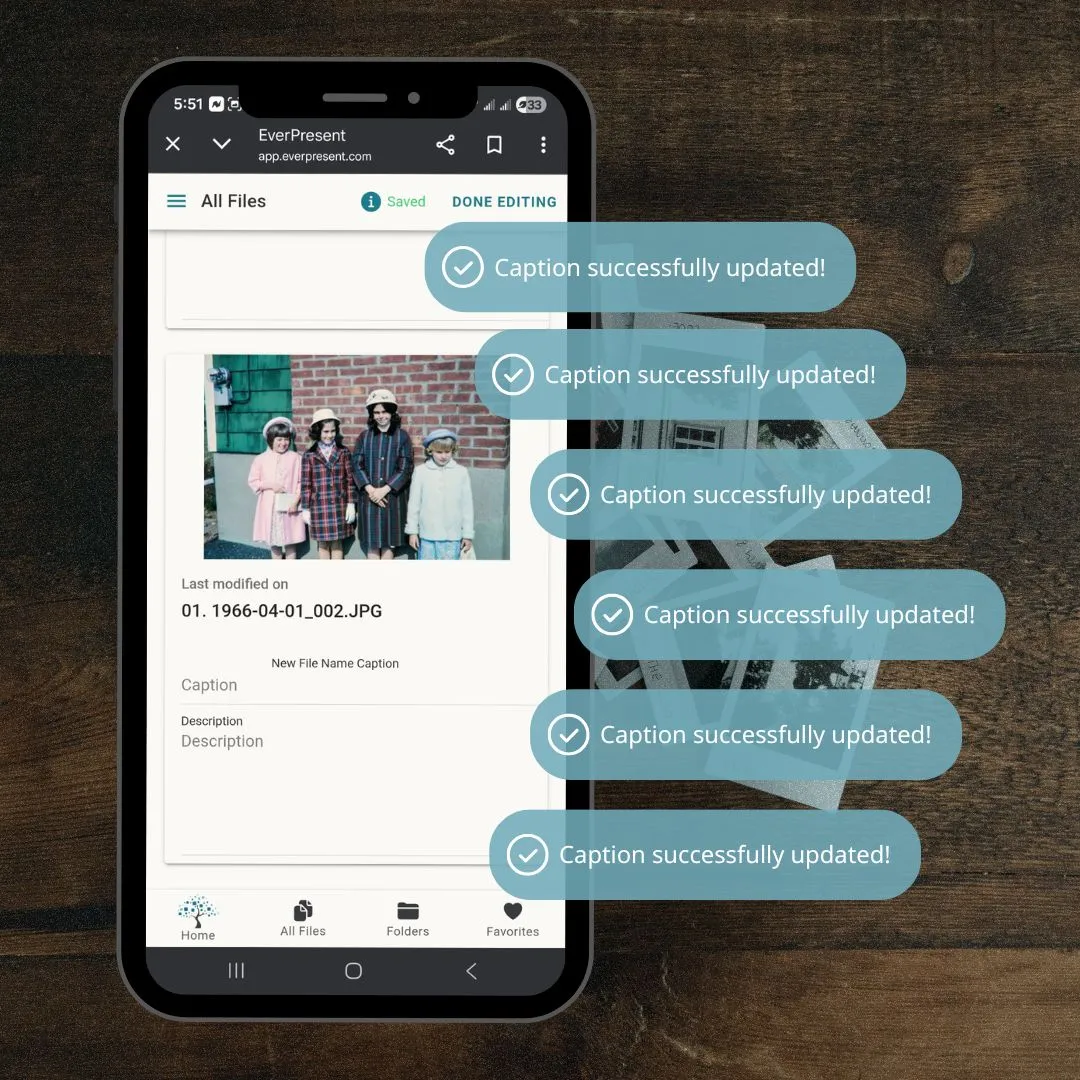
Handwriting and Notes: If someone took the time to annotate your photos, we are happy to preserve that work digitally. We can manually transcribe written notes into the caption metadata in your digitized pictures. Alternatively, we can also scan the backs of the images and provide the imagery of the handwriting adjacent to the scanned image.