

Expert level questions to ask when choosing a service to transfer VHS and other video tapes to digital
Hi, this is the EverPresent Team. We’re a respected digitizing company with locations throughout the east coast, and we get asked all the time by folks in other parts of the country how to pick the right company in their area to digitize their VHS and other video tapes. We’re thrilled to help. All that matters to us is that everyone gets their videos transferred to digital before it’s too late. You only get one shot at this, so we recommend you ask a few of the following questions to test the company. If you get the right answers, there’s a good chance you’ve found one of the many great companies devoted to digitizing our history!
Question: Ask what brand of equipment the company uses
Why does this matter? Good equipment yields better and more stable video captures.
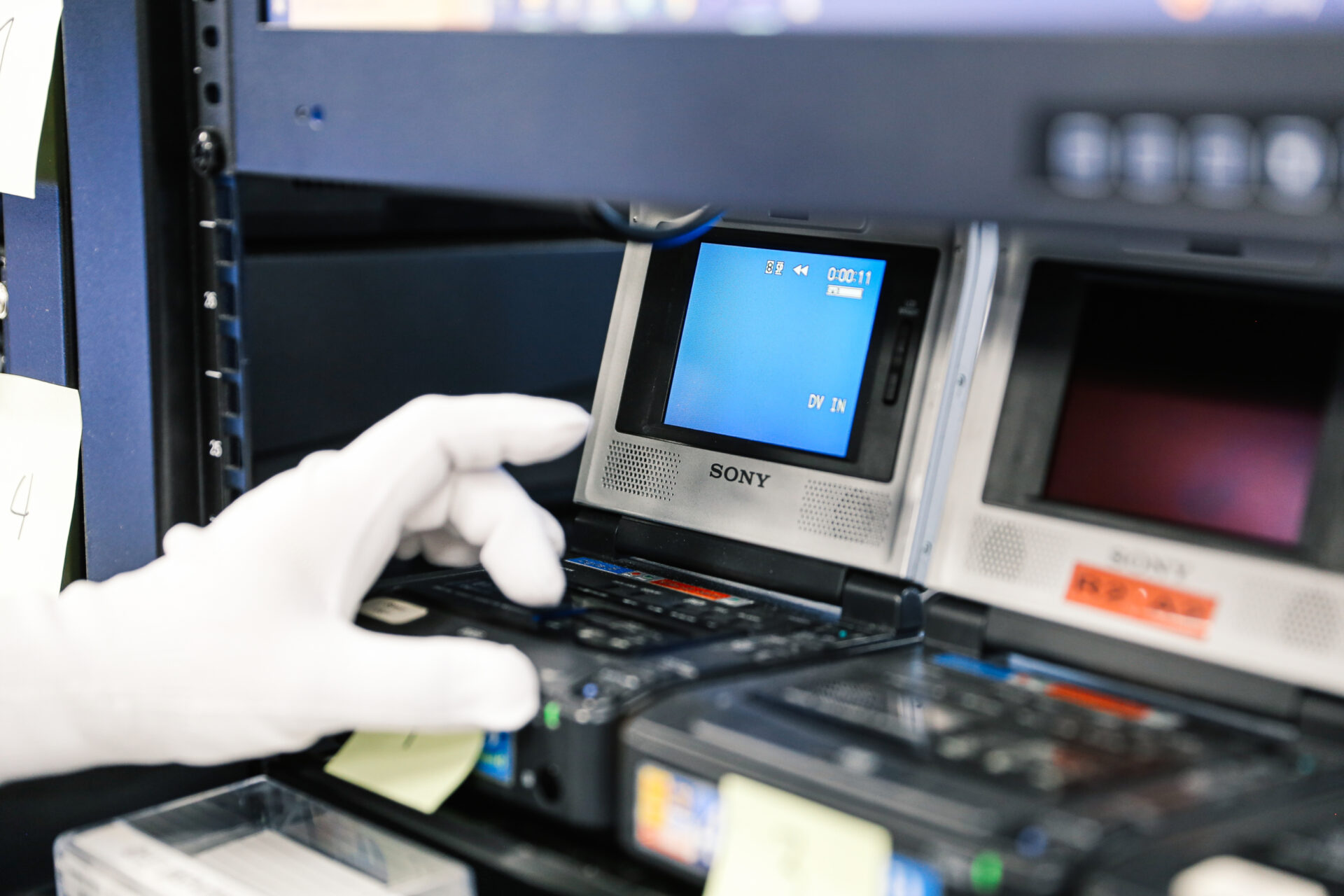
Answers you want to hear: Sony, Panasonic, JVC or TEAC. You do not want to hear answers like Funai. If you hear Toshiba, Mitsubishi, LG or Samsung, while those are great companies, it can be a cause for concern. Those companies were not generally involved in making high-end, pro-grade decks. They were often popular in the US for their dual decks that allowed you to convert VHS tapes directly to DVD. This is not a reliable way to digitize, and by not going directly to computer or server post-capture, it eliminates the key quality review step. If you have Hi8, 8mm, Digital8 or MiniDV tapes, even if you hear a good answer on the brand, you should confirm that the company is using a full-sized video deck, not a handheld camera.
Question: Ask which formats the company is able to digitize
Why does this matter? Companies with serious archival standards usually go well beyond VHS.
Answers you want to hear: More than just VHS, Hi8 and MiniDV. You want to hear formats like ¾ inch Umatic, Betacam, DVCPro. Never heard of them? These are the formats that were used by broadcast news stations, professional videographers, the government and generally in the “industry.” People who own these tapes are very discerning. The equipment is expensive and challenging to maintain. Companies that are experts in these formats can handle your consumer video tapes in their sleep. Companies that do not handle these formats are far less likely to be hyper focused on quality.

Question: Ask how the company handles labeling your video tapes
Why does this matter? It tells you a lot about the likelihood of a strong quality control process
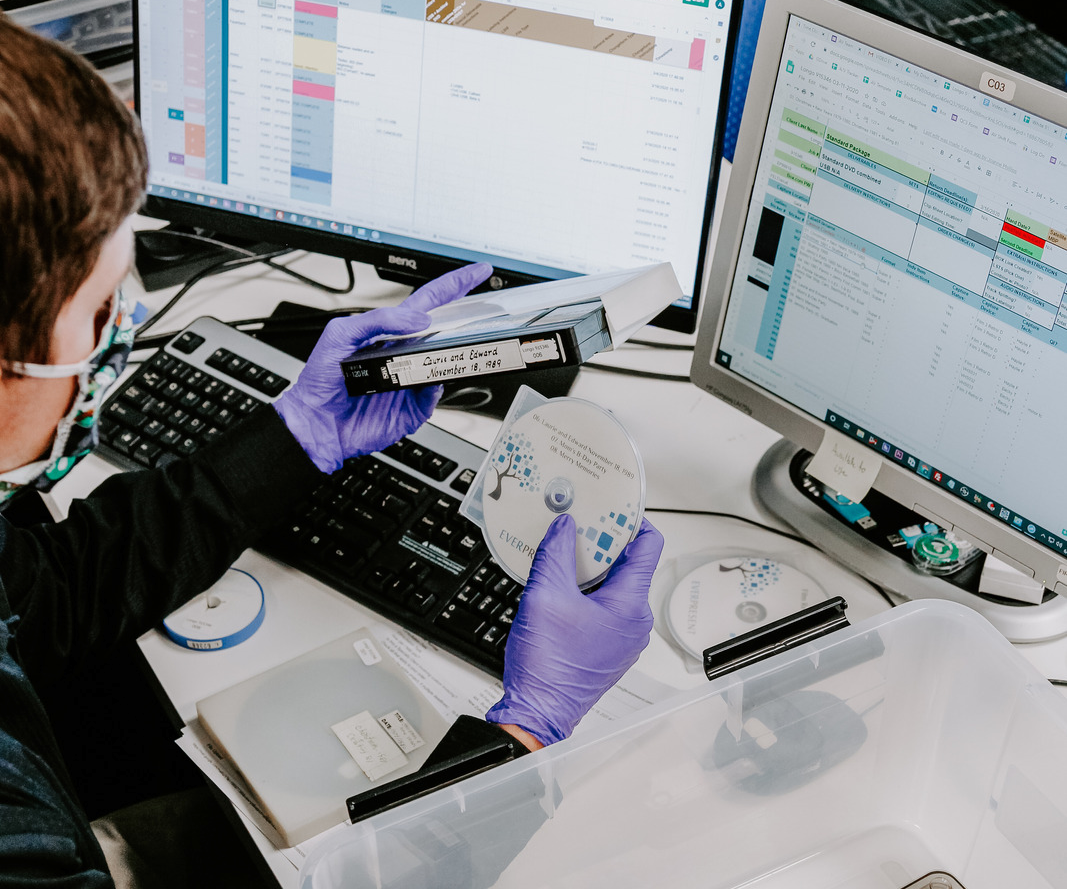
Answers you want to hear: That the company will transcribe your written labels into the filename on your hard drive or your DVD. This is about more than the convenience of a labeled, organized video archive. If the company tells you they don’t do that, or that you have to enter the labels yourself online, it means that their process probably has limited human handling. That’s not ideal. A proper digitizing workflow inspects the tape before digitizing to make sure it’s not broken, that it doesn’t have mold, etc. It’s a natural time to take a minute and transcribe the label. If you’re not doing this, you risk throwing tapes into video decks that can break, damage the film and damage the deck – or leave mold in the deck that will harm the next 100 tapes you digitize in the deck. Further, if you do written labeling, it means by definition someone at the end of the process is going to have to do a quality check to make sure it all came through well. The absence of a labeling transcription is a concern for the care being shown to the tapes and the integrity of the quality check system in general.
Question: Ask how the company connects its video players to its video transfer technology
Why does this matter? The connection defines the stability and capability of the video transfer
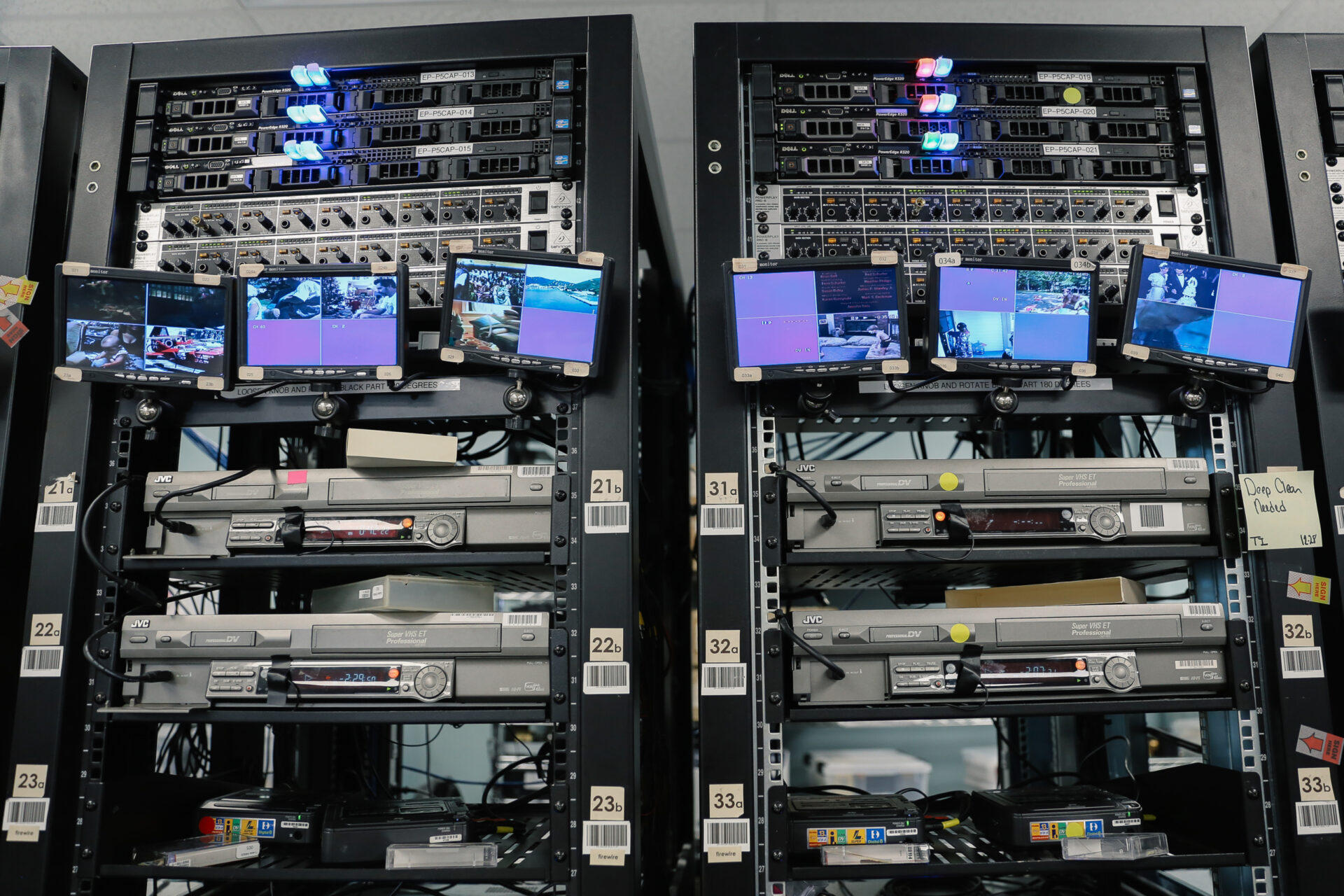
Answers you want to hear: If the company only relies on USB, S-Video, or RCA, that’s usually not ideal, as those setups often involve lower-end equipment or added compression.
However, some older formats like U-Matic and VHS were only ever capable of composite or S-Video output. For newer and digital formats (such as Digital Betacam, Hi8, HDCAM, and MiniDV), you should expect component, firewire, or SDI connections, which carry more signal detail and ensure a cleaner, more stable archival transfer.
Question: Ask about a random highly technical element to see if the company has a good answer
Why does this matter? Your project may not need any of these advanced services, but you should feel great if the company offers them.
Answers you want to hear: Here are a few examples you can try:
- Ask what file formats they provide. If they only say .mp4 or .mpeg, that means the company is not doing archival work. If they also offer things like ProRes .mov or JPEG2000, you’re dealing with a serious company.
- Ask how they handle damaged tapes. If they just mention repairs, that’s not a great sign. If they mention tape incubation to address potential sticky shed syndrome or mold cleaning, that’s a great sign. If companies don’t offer this, it means they are risking damaging tape, damaging decks, and damaging the next tapes that go into their decks. Literally every day we digitize tapes at EverPresent that a major brand returned to the client saying it couldn’t be digitized that we then have zero problem digitizing. Unfortunately a lot of companies only want to deal with the easy stuff.
- Ask if their decks have time based correctors. This is a great piece of technology that’s built into most advanced players, or that can be purchased separately, that helps assure a proper video-audio sync in the digitizing process and a generally more stable capture.
- Ask if they clip out blue screens and other junk. Getting 20 tapes digitized already means you’re looking at 40 hours of content to sort through. The last thing you want is an hour of bluescreen at the end of your video. If a company properly clips the beginning and end of your tape, it’s also another great sign of a strong quality control process. Related, be very wary of any company that says they are only capturing a max of 2 or 2.5 hours per tape. It probably means they are not checking the digitization, and it means that if you had LP or SLP tapes, you are going to be losing footage. This especially matters for VHS tapes.
That was a lot, and you absolutely will not need to ask all of these questions. One or two should tell you everything you need to know about whether you’re dealing with a serious, archival grade digitizing company. The lower-end companies only focused on consumers are reasonably unlikely to address the more challenging tapes. That increases the likelihood of them being returned to you with no attempt having been made to digitize them, or worse, the tapes permanently damaged before a proper digital transfer could be completed.
Before we close, we’d also like to give you some warning about some pitfalls to avoid when looking at digitizing companies.
Pitfall #1 – Fake Local.
Most of our clients choose a local digitizing provider because of their fear of their single copy of their home movie tapes being lost among millions of packages being handled by USPS, UPS and FedEx. So if you care about local service, you want to make sure that the shop you are working with is not just putting it in the mail to be digitized by someone else. You should just ask if the company does the work on site, and if they don’t, confirm they are handling their own logistics like we do and personally transporting everything to a nearby high-tech lab. A lot of the best digitizing companies are a bit like a dry cleaners, with convenient storefront locations for their clients, and then driving their own vans to those locations and their clients homes to transport everything to a secure location with some serious equipment.
Pitfall #2 – Fake Pricing.
There are a lot of companies out there offering $X per video transfer where the transfer doesn’t include anything. That’s misleading and does not speak well of the company. When you read the price on a website, if it doesn’t include one of a digital download, flash drive or DVD, you might reconsider. It’s very frustrating to think you are paying $X to transfer a VHS tape only to learn that for that price you have to add 40% more to be able to actually view it.
Pitfall #2 – Gimmicky AI or Upscaling.
Lately, more and more companies are just throwing around AI. We’re all learning together on this. Here’s our advice on this topic:
- Most importantly, you don’t need AI enhancements or upscaling. Don’t feel pressure. It’s OK if older VHS footage looks old. It’s authentic and part of the charm.
- Don’t pick a company because of AI capabilities if you don’t 110% trust them on everything else in this article. AI will not overcome the video player failing to capture the whole tape, or dropping footage, or any other major quality issues.
- If you do want to go in this direction, know why you are doing it. If you are planning on using footage on really large screens or as part of formal marketing materials, it can make a lot of sense. If you’re just planning to use it to watch clips on your phone and remember the good old days, it’s not necessary.
- Make sure the AI is good. AI invents pixels. We’ve seen AI that comes out cartoonish and unwatchable. And we’ve seen AI where the results are barely noticeable to the naked eye. Do your homework.
Pitfall #2 – Turnaround Time.
As has been mentioned, the equipment we use in this industry is expensive. Technicians need to be highly trained. The process has many steps. If a company is emphasizing super fast turnaround times, that is not a good sign. If a company can move super quickly, that likely they aren’t that busy, and/or use cheaper equipment so they can have a lot of surplus lying around. None of that is compelling. This doesn’t mean that you should wait six months for your videos to be digitized. But if a company needs a few weeks or 1-2 months, you should be thrilled to hear that. It means they are popular and busy. It probably means they take their time and don’t cut corners. It may mean they are currently digitizing 1,000 tapes for the Smithsonian. If the company is promising just a few days or 1-2 weeks, don’t necessarily look at it as a good thing. Your tapes have been waiting decades to be digitized. Think about digitizing like a restaurant. Do you prefer to wait a few minutes for a table at the popular crowded restaurant, or sit down right away at the empty restaurant? Take a few extra weeks and get it done right.
If you’ve taken the time to read this whole article, you have our respect! Choosing a video digitizing vendor is a bit unique. You will literally only do this project once in your life. The results will last forever. It’s worth asking a few extra questions to get it done right. And it’s definitely not worth saving just a few bucks or a few weeks if that means it gets done wrong.
Best of luck to you and congratulations on beginning this journey. Your family will thank you down the road.