

UNDERSTANDING FILM FORMATS: WHAT IS A HALF-FRAME CAMERA?
Half-frame film cameras are having a (well-deserved!) revival. As more photographers return to film — or discover it for the first time — this quirky little format is finding its place again in backpacks, glove boxes, and carry-on luggage.
In this guide, we walk through how half-frame cameras work, their biggest strengths and limitations, and why they can be an incredibly fun choice for creative storytelling or travel photography.
WHAT IS A HALF-FRAME CAMERA?
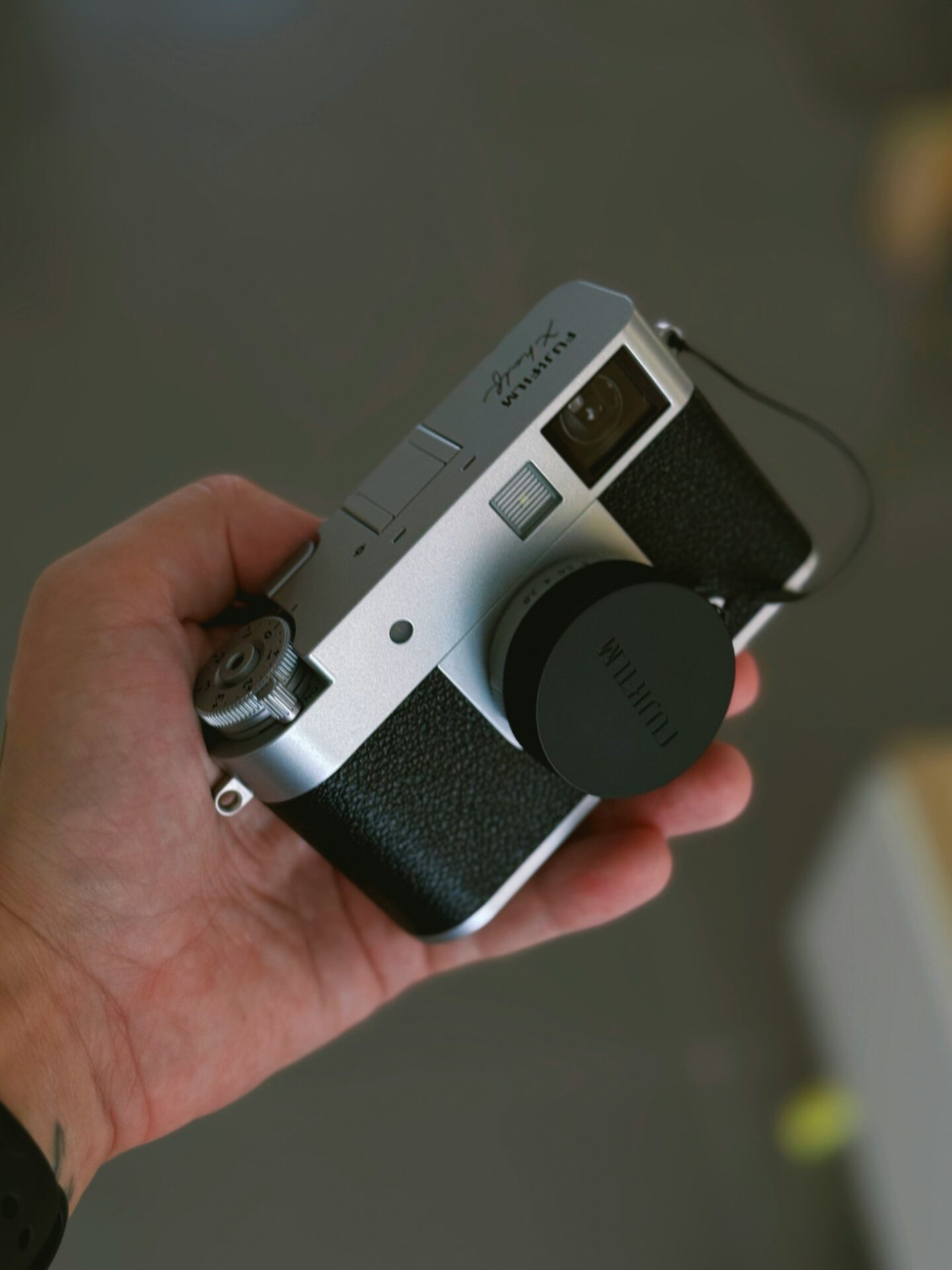
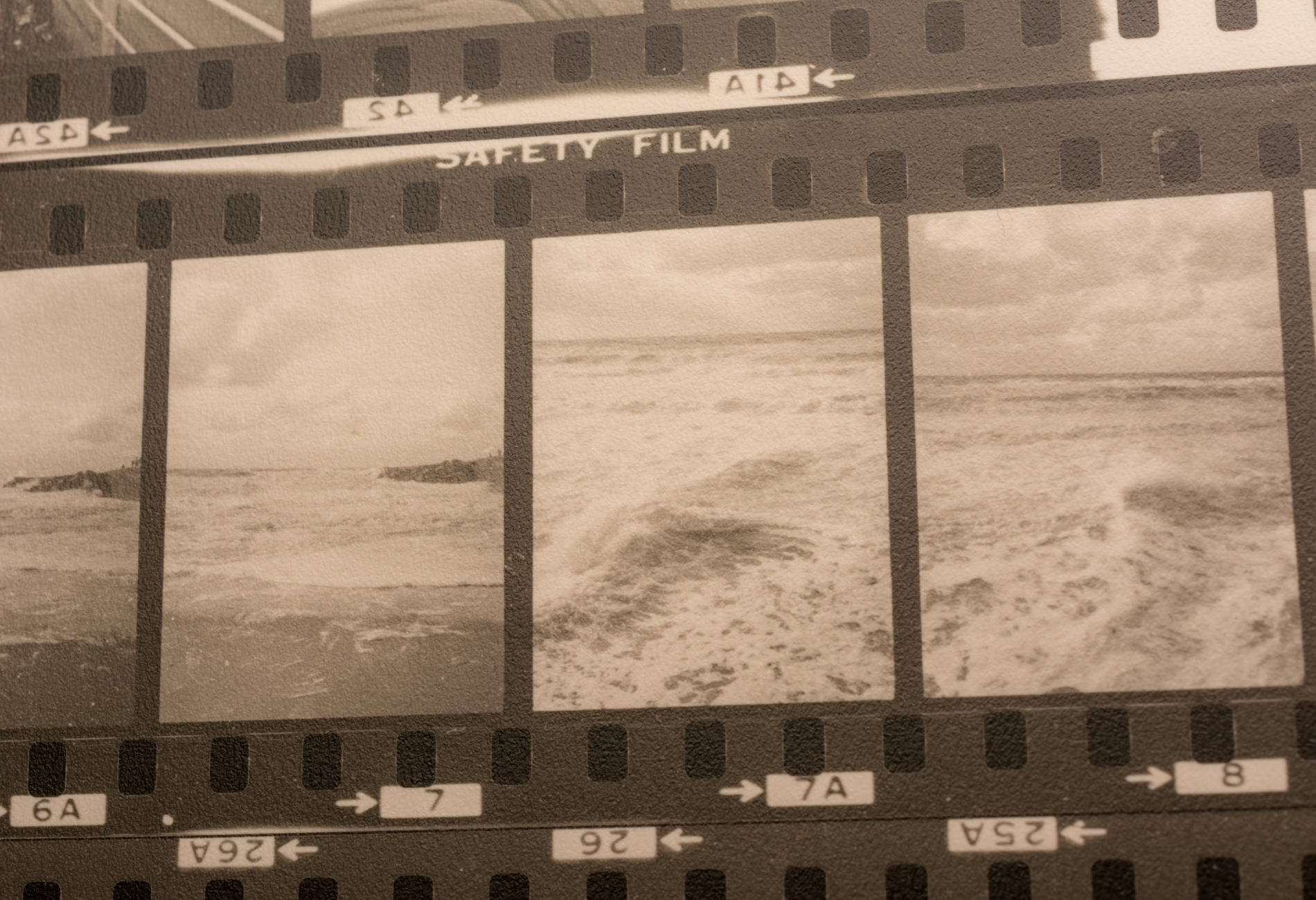
A half-frame camera is exactly what it sounds like. Instead of exposing a full 35mm frame, it only uses half. Essentially, it can shoot two images in the space normally used for one. A standard 35mm frame measures 36×24mm, while half-frame cameras use 18×24mm.
This simple shift in format changes the shooting experience. On a full-frame 35mm camera, each shutter press gives you one image. On a half-frame camera, each press gives you one image, but you only advance the film half as far, so you get twice the number of exposures from the same roll.
WHEN WERE HALF-FRAME CAMERAS POPULAR?
Half-frame cameras were hugely popular from the 1960s through the 1980s, especially among casual shooters who wanted more value from their film and compact cameras for everyday snapshots.
Some of the most beloved models came from this era, including the Olympus Pen series (particularly the Pen EE and Pen FT), Canon Demi, Yashica Samurai, and Ricoh Auto Half. Their pocket-friendly size and simple operation made them perfect for capturing the moments of daily life long before smartphones existed.
HOW DO HALF-FRAME CAMERAS WORK?
At this point, you’re probably wondering, ‘Do half-frame cameras need special film?’ The answer is refreshingly simple: No. They use the same 35mm film you’d put into any SLR or point-and-shoot. The difference lies entirely in the camera’s design.
FRAME SIZE
Because each shot occupies half the usual area, your 36-exposure roll suddenly becomes a 72-exposure roll. Some cameras even push that into the high 70s or low 80s, depending on how tightly they load the film.
FILM ADVANCEMENT
Instead of advancing a full frame’s length after each shot, these cameras move the film half the distance. It might sound confusing, and often has people asking how to use half-frame film camera models, but thankfully, the mechanics are simple even for beginners.
VIEWFINDER ORIENTATION
Most half-frame cameras are naturally portrait-oriented, encouraging a different way of composing shots. Landscape orientation is still possible (you just rotate the camera), but the portrait default can spark creativity.
LENS AND FOCAL LENGTH
They typically come with fixed lenses in the 28mm-35mm range (equivalent to roughly a 40mm-50mm field of view in full-frame terms). These lenses were designed with everyday shooting in mind: street scenes, travel snapshots, portraits, and daily documentation.
THE ADVANTAGES OF HALF-FRAME CAMERAS
A lot of film photographers ask: Are half-frame cameras worth it? Well, they can be fantastic depending on what — and how — you like to shoot.
TWICE THE PHOTOS PER ROLL
This is the iconic perk. Doubling your exposures means a lower cost per shot, which is handy if you’re budgeting for film and developing, and more room to experiment as you’re less precious about each frame.
For long-term projects, diaries, or documentation, this efficiency is game-changing.
LIGHTWEIGHT, PORTABLE DESIGNS
Half-frame film cameras are compact, minimalist, and easy to slip into a pocket or bag. They’re ideal for travelling light, street photography, and shooting without attracting attention. That casual, unobtrusive feel is a big part of their charm.
CREATIVE STORYTELLING POSSIBILITIES
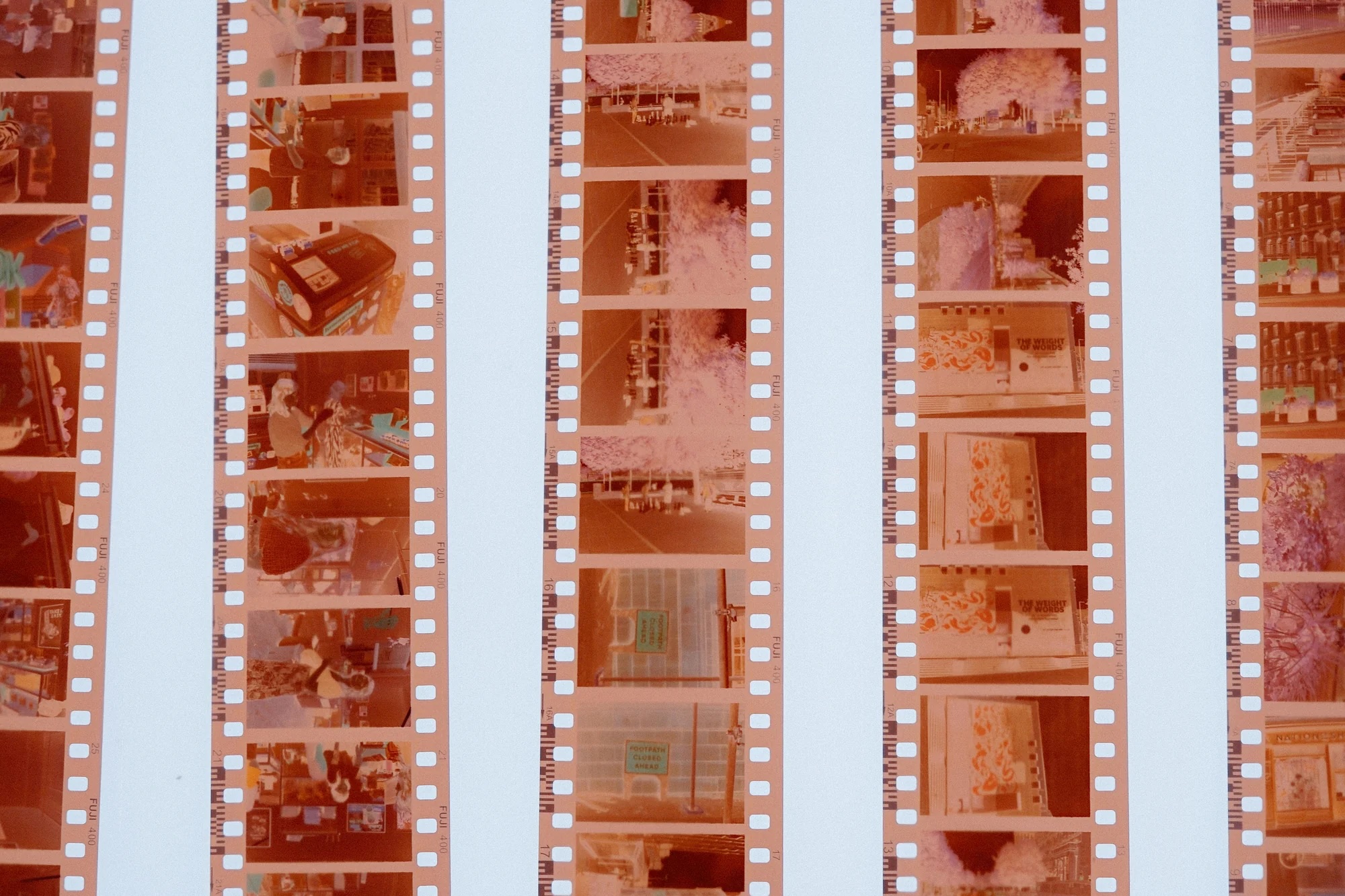
The true magic of half-frame shooting comes from how the images pair together on the film strip.
Because two frames sit side-by-side, you can create:
- Diptychs, or two sequential images that tell one story
- Before/after moments
- Movement sequences
- Contrasting scenes or colors
- Mini-narratives across the roll
The natural pairing pushes many photographers to think in scenes instead of single images. And that portrait-first viewfinder? It gives images a distinct look right from the start.
THE QUIRKS AND LIMITATIONS
Are half-frame film cameras good for every situation? Not really. Their unique design comes with a few trade-offs.
GRAIN AND IMAGE QUALITY
Because the negative is half the size, grain becomes more visible, especially in low-light images or with high-ISO film. That said, today’s modern film stocks are far more forgiving than mid-century emulsions. Shooting with fine-grain films like Kodak Ektar, Portra, or Ilford FP4 can produce surprisingly crisp results.
FOCUSING AND EXPOSURE CHALLENGES
Many half-frame cameras are zone-focus or fixed-focus, meaning you estimate distance rather than relying on autofocus. They can also be prone to metering inconsistencies, especially after decades of wear.
These quirks aren’t deal-breakers, but they do require a bit of patience and awareness. It’s part of the charm for some, and a frustration for others.
WHY HALF-FRAME CAMERAS SHINE IN TRAVEL AND CREATIVE PROJECTS
For everything from documenting a road trip to keeping a visual journal, half-frame film cameras are many photographers’ first choice.
A few reasons they stand out:
- Long rolls mean carrying fewer film canisters, which matters when you’re packing light.
- Side-by-side frames encourage storytelling, making a travel sequence feel like a cohesive visual narrative.
- The slower pace (estimating focus, watching light, and planning diptychs) helps you shoot more intentionally.
For a lot of photographers, the half-frame format strikes the perfect balance between spontaneity and thoughtfulness.
DIGITIZE YOUR HALF-FRAME NEGATIVES
At EverPresent, we’ve scanned thousands of half-frame rolls, film projects, and family archives. We provide high-quality scans (essential for the small size of the negatives) to make the most of your images. Professional digitization ensures that the grain, color, and contrast of these small negatives are handled with care.
Ready to bring your half-frame images into the digital world? Get in touch with EverPresent to start your negative scanning project today.