

How to Find the Best Slide & Negative Scanning Company
Key questions to find the best services for converting slides and negatives to digital, and our review of the America’s top-five slide & negative scanning companies.
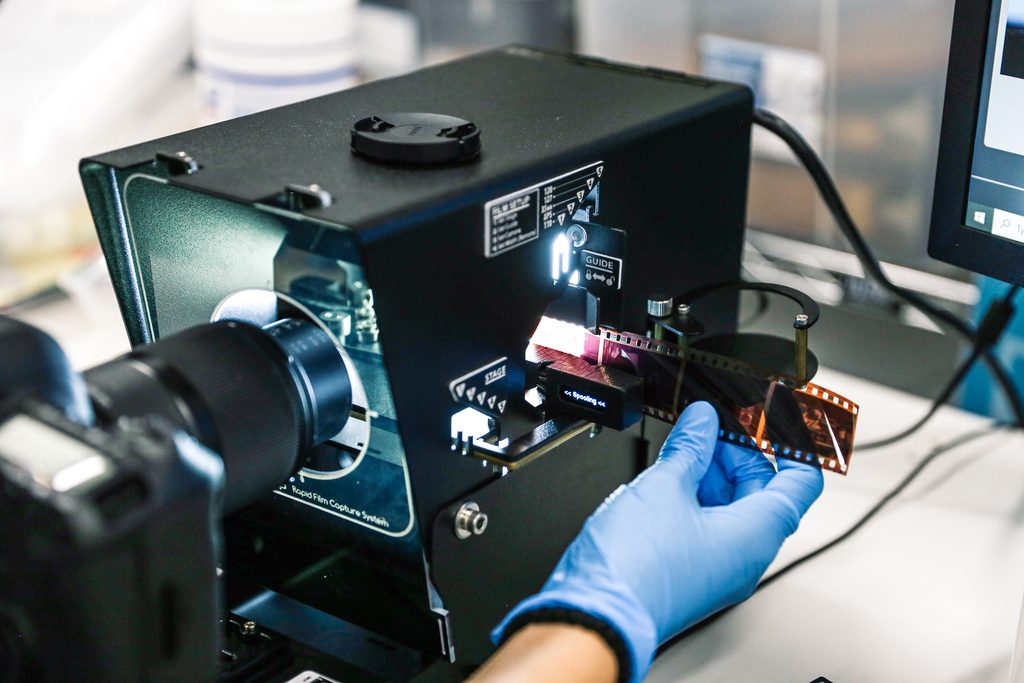
Digitizing slides and negatives is the connoisseurs’ segment of the photo scanning market. People who shot and preserved these formats cared about quality and organization. If someone kept slides instead of prints, they did it because they wanted a format that would age better and preserve significantly more pixels. Slides in particular come in a wide variety of containers with various methods of preserving labeling. Scanning print photos is fairly forgiving. Slide and negative scanning is not. It matters who you pick to do the conversion to digital, and we’re here to help you ask a few qualifying questions to find the best service in your area.
Question 1: Do you offer upgrades to high resolution?
Why this matters? Any respectable imaging element not only should be able to upgrade to get full resolution, but also have flexibility to handle different sized slides and negatives. If a company is one-size-fits all, that is a very bad sign.
Answer you want to hear: At minimum, you want to hear that the baseline DPI is 2,000 and that there can be upgraded to 4,000 DPI for any 35mm format or similar. In photo print scanning, where most prints are natively 100 to 300 PPI, many companies include 600DPI because it’s cheap to do and does no harm. Upgrades to 1,200 DPI are a scam that invent pixels. In slide and negative scanning, there are extra pixels in the film. The upgraded DPI is not a must, but if it’s offered, it means the service cares, works with pro-level clients, and is providing you the ability to make large reprints down the road if you want.
Question 2: Can slides be submitted in their containers or do they have to be removed?
Why this matters? When removed from containers, it’s incredibly easy for them to fall out of order in transit. Clients may not also realize that slides in numbered slots correspond directly to caption index cards. Once the slides are removed, the labeling system is lost.
What you want to hear: Ideally, your digitizing company will take slides as is, digitize them in order, and create a unique folder for each box, carousel, binder, etc. Ideally, a company will be willing to take them in these containers, and then offer to return them in a more space-saving box for future efficiency in your home
Question 3: What archival options are offered?
Why does this matter? Companies offering archival services have to satisfy sophisticated institutional clientele, and you benefit from this expertise even if you don’t need the upgrade.
Answer you want to hear: If your photo scanning service offers .TIF files, that’s a really good sign. Related, if you see general language on a photo scanning company’s website about metadata or working with digital asset management systems, that’s also a very good sign. It’s also a great sign if the company advertises digitizing medical or scientific slides.
Question 4: Do you handle non-35mm film formats?
Why this matters? Most clients do not realize that 10-20% of their film is likely a different format. There were almost 20 common slide and negative film formats in the heyday, and many companies will reject or mis-scan these items.
Answer you want to hear: You want to hear that companies scan all non-standard slide formats and all medium and large format negative formats. It’s a really good sign if a company mentions handling super obscure formats like disc film, glass plate negatives or 3D stereo slides. This tells you not only that the company has the technical chops, but also that their technicians are trained to recognize these formats and alter the digitizing specs accordingly. Any company showing deep experience with medium and large format negatives in particular will tend to have real credibility, as most of that film was used by professional photographers and they are very picky about their scans. For a full understanding of types of film scanning and help identifying what you have:
EverPresent’s slide format guide
EverPresent’s negative format guide
Question 5: What services are available beyond the basic scanning?
Why this matters? Slide and negative archives tend to be complex and nuanced. Whether included or optional, if you really care about your slide-scanning, you’ll want to know that some advanced options are available.
Answer you want to hear: Beyond the basics like correct orientation, clean cropping, inverting the negatives to positives and more, there are some really important things to look out for to assure you’re working with a top-notch slide and negative scanning company:
- Dust removal is done by hand and with software. Most companies will use some level of software to remove a few dust remnants but nothing replaces hand-cleaning of slides. In addition to removing full particles, a general light film or mask of dust is common on slides, and it must go before scanning. You want to see companies mentioning cleaning with compressed air and/or microfiber cloth as part of the baseline slide digitizing service.
- Awareness and sensitivity to color shift and newton rings. In slides, color shift over the years specifically in magenta is common. A reputable company will be on the lookout for it and fix it, which is very doable. And with larger negatives, there’s a very specific kind of glass that must be used, especially for medium and larger format negatives, to avoid the newton ring defect and shift in the oranges. Again, this is basic stuff that doesn’t add cost, but less sophisticated outfits will miss it.
The purpose of this article is to help you evaluate any slide or negative scanning company. At EverPresent we are huge proponents of local digitizing companies, and this article will help you pick the good ones, especially outside of the 14 states where we provide local service.
For those of you open to the mail, below we have provided a detailed comparison of the five largest slide and negative digital conversion companies in America.
Comparing The Five Largest Slide Scanning Services
An honest comparison to help you choose the best company for your slide or negative digitizing project.

Digitizing Photos, Slides, Negatives and Albums
Slides generally have the best labeling of any image format we see, so our process allows you to send them to us in carousels, boxes, binders, etc. as they are, and we create labeled folders with scans in order for each one.
|
EverPresent |
LegacyBox |
iMemories |
ScanCafe |
CVS, Walmart |
|
|---|---|---|---|---|---|
|
Formats Handled |
✅ |
❌ |
❌ |
✅ |
❌ |
|
Submission Requirements |
✅ |
❌ |
❌ |
❌ |
❌ |
|
Digitizing Upgrades |
✅ |
❌ |
❌ |
✅ |
❌ |
|
Organizing Options |
✅ |
❌ |
❌ |
❌ |
❌ |
Shipping & Drop-off Experience
All transport between our stores, your homes and our high-tech labs is handled by our private in-house logistics network that’s 100% devoted to safely transporting your precious photos and videos.
|
EverPresent |
LegacyBox |
iMemories |
ScanCafe |
CVS, Walmart |
|
|---|---|---|---|---|---|
|
Home Pickup |
✅ |
❌ |
❌ |
❌ |
❌ |
|
Local Stores |
✅ |
❌ |
❌ |
❌ |
✅ |
|
Inbound Shipping Included |
✅ |
✅ |
❌ |
❌ |
✅ |
|
Flexible Shipping Approach |
✅ |
❌ |
❌ |
✅ |
✅ |
Shopping & Service Experience
We are the only major national company that makes it 100% free to get us your project, counts everything for you, build an inventory, and provides a free estimate and personal consultation before you pay a dime.
|
EverPresent |
LegacyBox |
iMemories |
ScanCafe |
CVS, Walmart |
|
|---|---|---|---|---|---|
|
Inventory & Quotes |
✅ |
❌ |
❌ |
❌ |
❌ |
|
Order Approval |
✅ |
❌ |
❌ |
✅ |
❌ |
|
Personalized Ordering Experience |
✅ |
❌ |
❌ |
✅ |
❌ |
|
Digital Delivery Options |
✅ |
❌ |
✅ |
❌ |
❌ |
*Information regarding competitors is based on public research and market knowledge available at the time of publication. Product features, and service offerings are subject to change. EverPresent does not guarantee the absolute accuracy of competitor data. Please verify all information directly with the respective service provider.
Format Guides
EverPresent guide to film negatives
EverPresent guide to slide formats
35mm negatives
APS Negatives
135 Film
Disc Film
Glass Negatives
220 Medium Format Film
120 Medium Format Film
Stereo slides
Helpful Articles
Pros and cons of digitizing photos vs. negatives if you have both
TIFF vs. JPEG – what’s the difference?
How to safely store film negatives
How to buy a projector to preview your slides
How to safely clean negatives before scanning
Need to develop film before scanning? Here’s where you can still do it.
*Information regarding competitors is based on public research and market knowledge available at the time of publication. Product features, and service offerings are subject to change. EverPresent does not guarantee the absolute accuracy of competitor data. Please verify all information directly with the respective service provider.