
Written by Amy Hammond
If you’ve ever cleaned out your attic or storage boxes and uncovered a stash of small, plastic film canisters labeled “APS,” you’re not alone. The Advanced Photo System was a popular film format in the late 1990s and early 2000s, and many people still have APS film cartridges tucked away in drawers and memento boxes.
But before you can do anything with it, it’s helpful to understand what you’re working with. Here’s our rundown of what APS film is, how it works, and what you need to know if you’re hoping to view or digitize those images today.
WHAT IS APS FILM?
APS stands for Advanced Photo System. It’s a film format that was introduced in 1996 as a modern alternative to traditional 35mm film.
APS film aimed to make photography more accessible and automated for everyday users. With this new film, anyone could be a photographer. The hope was to keep film relevant, as the age of digital photography loomed on the horizon.
APS was developed by an alliance of major photography companies, including big names like Kodak, Fujifilm, Canon, Nikon, and Minolta. By simplifying the shooting and processing experience, these companies hoped they could keep film photography alive.
APS FILM FORMATS AND ASPECT RATIOS
One of APS film’s standout features was the ability to choose between different image formats. For this, you didn’t need to buy separate films. The same roll could capture images in three different formats:
- C (CLASSIC): The Classic (C) format has a 3:2 aspect ratio, similar to traditional 35mm prints. This was the standard format and the most commonly used.
- H (HIGH DEFINITION): The High Definition (H) format uses a wider 16:9 aspect ratio. Despite the name, it doesn’t increase resolution, but simply captures a wider frame.
- P (PANORAMIC): The Panoramic (P) format offers an even wider, more cinematic look. It creates elongated prints with a narrow vertical crop.
APS cameras didn’t change the physical size of the negative when switching formats, but instead saved the user’s format choice on a magnetic strip. This means the full image area often still exists on the negative, which can be useful when digitizing.
WHAT IS AN APS FILM CARTRIDGE?
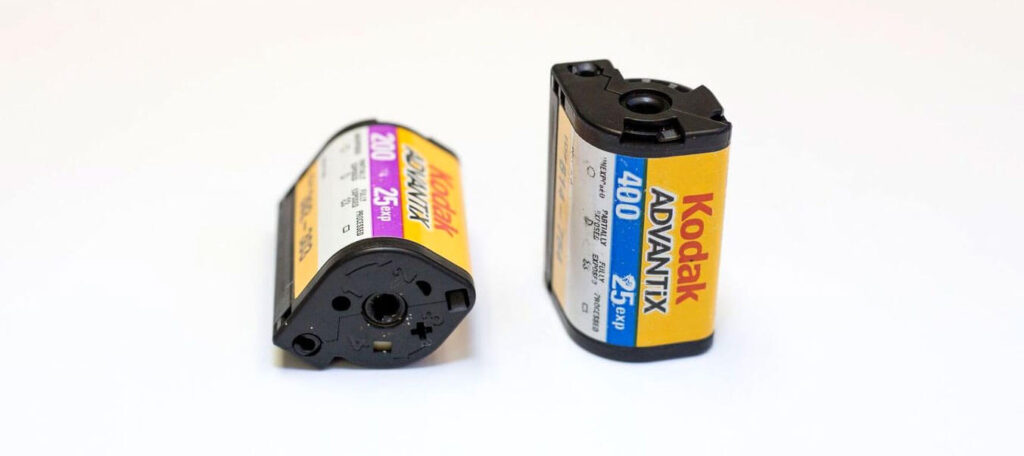
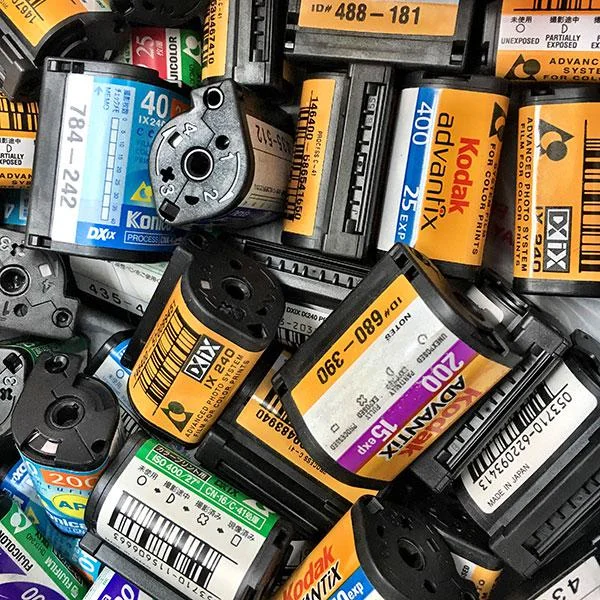
An APS film cartridge is the key to the whole format. It’s a small, oval-shaped plastic canister that fully encloses the film inside.
Unlike 35mm film, which must be manually threaded into a camera, APS film is fully enclosed in a compact plastic cartridge, with a drop-in loading system. You simply insert it and close the camera, with no need to pull film across spools.
Key features include:
- Drop-in loading: No manual threading required
- Light protection: Film remains protected even after partial use
- Status indicators: Symbols on the cartridge show whether the film is unexposed, partially exposed, fully exposed, or processed, so users can determine the film’s state without opening the canister
- Magnetic IX data strip: Stores shooting information (date and time, exposure settings, print preference), to influence how the film was printed
Because the film stays inside the cartridge, even after processing, it’s different from 35mm negatives, which are typically returned in strips. This enclosed design makes APS cartridges feel sturdy and compact, but it also means accessing and scanning the negatives requires specific equipment — more on that in a minute.
ABOUT THE APS FILM CAMERA
APS film cameras were designed with convenience in mind. Compared to traditional 35mm cameras, they were generally smaller and lighter, more automated, and easier to load and unload.
Most APS cameras were point-and-shoot models, though some manufacturers produced more advanced versions with zoom lenses and manual controls.
ADVANTAGES
These cameras prioritized simplicity. Features like motorized film advance, automatic rewinding, and selectable print formats made photography feel more accessible to casual users.
The main advantages of APS cameras include easy loading, compact camera bodies, automated shooting features, and built-in metadata for lab printing.
LIMITATIONS AND IMAGE QUALITY TRADEOFFS
The main drawback of APS film was its smaller negative size. APS negatives measure approximately 24mm wide but are shorter in height than 35mm film frames.
Smaller negatives generally mean more visible grain, lower overall resolution, and reduced detail in enlargements.
As digital cameras improved in the early 2000s, APS film quickly fell out of fashion, and production of APS film was eventually discontinued.
APS FILM VS. 35MM FILM
If you’re comparing APS film vs. 35 mm film, here are the key considerations:
| APS film | 35mm film | |
| Negative size | Smaller overall image area | Approximately 36mm × 24mm |
| Detail captured | Smaller negative captures less detail | Larger negative captures more detail |
| Image quality | Can still look great in small prints, but more limited when enlarged | Typically sharper images with better tonal range |
| Grain and resolution | More grain due to smaller negative, especially noticeable in low light or large prints | Less grain, better resolution overall |
| Ease of use | Very beginner-friendly with drop-in loading and automated features | Requires manual loading, less automated |
In short, APS prioritized convenience, while 35mm takes the crown for image quality and flexibility.
APS FILM SCANNING AND DIGITIZATION
Digitizing APS film is absolutely possible, but it requires specialized handling.
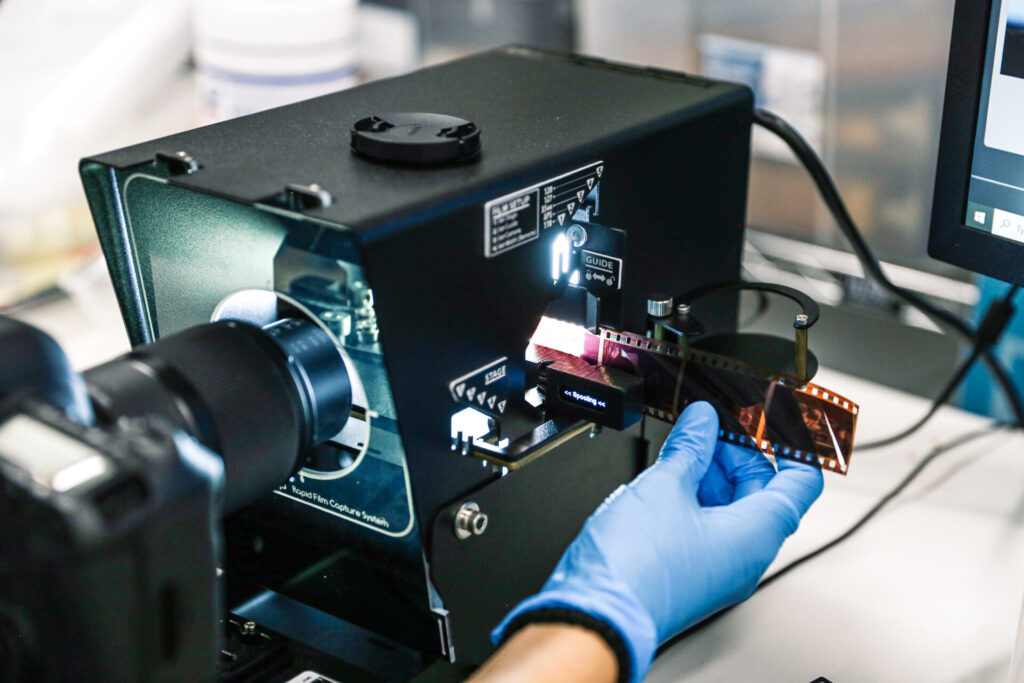
Because the negatives remain inside the cartridge, they can’t simply be laid flat on a standard scanner like 35mm strips. The film must be carefully extracted using an APS film scanner specifically designed for this film.
Modern scanning technology can recover impressive detail from APS negatives when handled properly. Professional digitization ensures the film is safely accessed, cleaned, and scanned at an appropriate resolution to preserve as much quality as possible.
WE CAN TRANSFER APS FILM TO DIGITAL
If you’ve found APS cartridges in storage, there’s a good chance they contain memories that haven’t been viewed in years.
At EverPresent, we specialize in digitizing legacy media formats, including APS film. Our team understands the unique handling requirements of APS cartridges and uses professional-grade equipment to safely extract and scan your negatives.
Whether your goal is to preserve family photos, share memories, create digital backups, or print new copies, we can help convert APS film to digital and bring your images back to life.
APS may be a discontinued format, but your memories don’t have to stay stuck in the past. If you’re ready to see what’s inside those canisters, we’re here to help. Get in touch about digitizing your APS film canisters.