
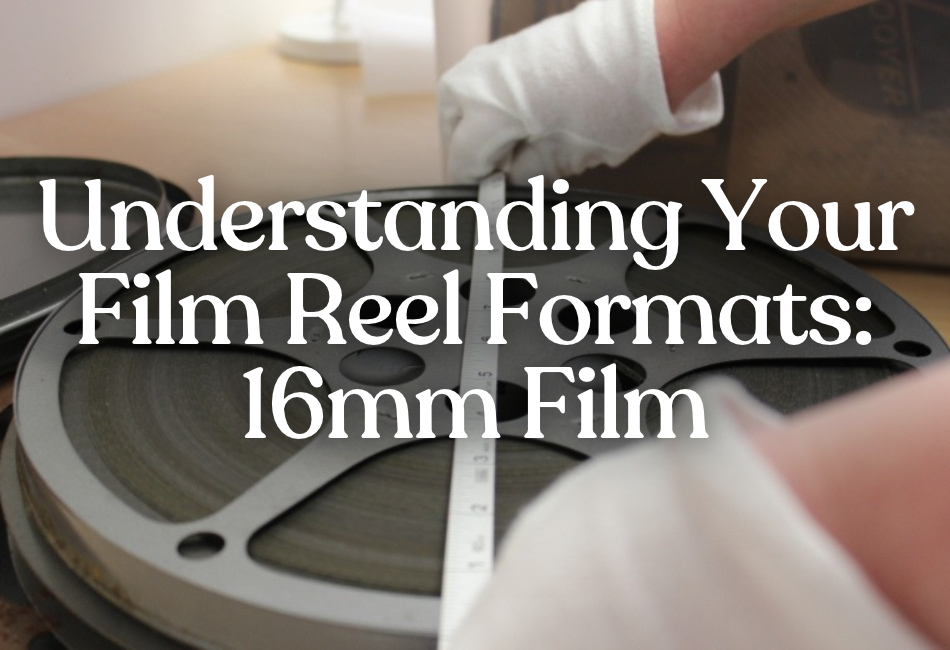
Before home video cameras and 8mm film became household staples, 16mm film helped bring motion pictures beyond the movie theater. From family gatherings and school productions to educational films and documentaries, this format captured decades of history on reels that many people still have tucked away in storage.
First introduced more than a century ago, 16mm film remains an important part of motion-picture history. Here are a few things worth knowing about the format:
- 16mm film was introduced by Kodak in 1923 as a more affordable and accessible alternative to professional 35mm motion-picture film. Its smaller size and relatively inexpensive equipment made filmmaking practical for schools, organizations, amateur filmmakers, and families.
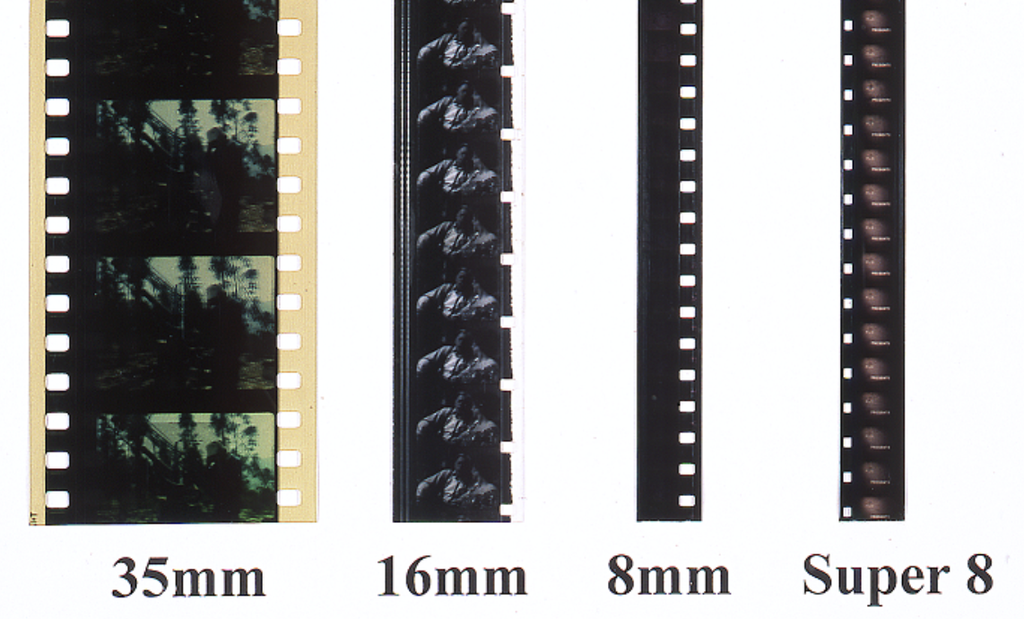
- The film is 16 millimeters wide, twice the width of Standard 8mm and Super 8 film. Its larger image area generally allows for more detail than the smaller home-movie formats, although actual picture quality depends on the camera, film stock, and condition of the original footage.
- 16mm film became especially popular for educational and documentary filmmaking. Schools, government agencies, businesses, and independent filmmakers used it extensively throughout the twentieth century. It was also used for television news gathering and professional productions.
- Common playback speeds include 16, 18, and 24 frames per second, depending on when and how the footage was recorded. Silent home movies often used lower frame rates, while sound films and professional productions commonly ran at 24 frames per second.
- A 100-foot reel of 16mm film contains approximately three to four minutes of footage, depending on playback speed. Larger reels can hold considerably more, which is why some 16mm collections consist of just a few large reels rather than dozens of small ones.
- 16mm film may contain sound or be completely silent. Some reels have an optical soundtrack running alongside the picture, while others use a magnetic soundtrack. Many early amateur films were silent, so the absence of audio does not necessarily indicate that anything is missing.
- Not all 16mm film has sprocket holes on both sides. Double-perforated film has holes along both edges, while single-perforated film leaves space along one edge for a soundtrack or other uses. Both varieties belong to the same film format.
- 16mm film is still used today. Although digital cameras dominate modern production, some filmmakers continue to shoot on 16mm for its distinctive visual texture and traditional film aesthetic.
How Can You Tell If You Have 16mm Film?
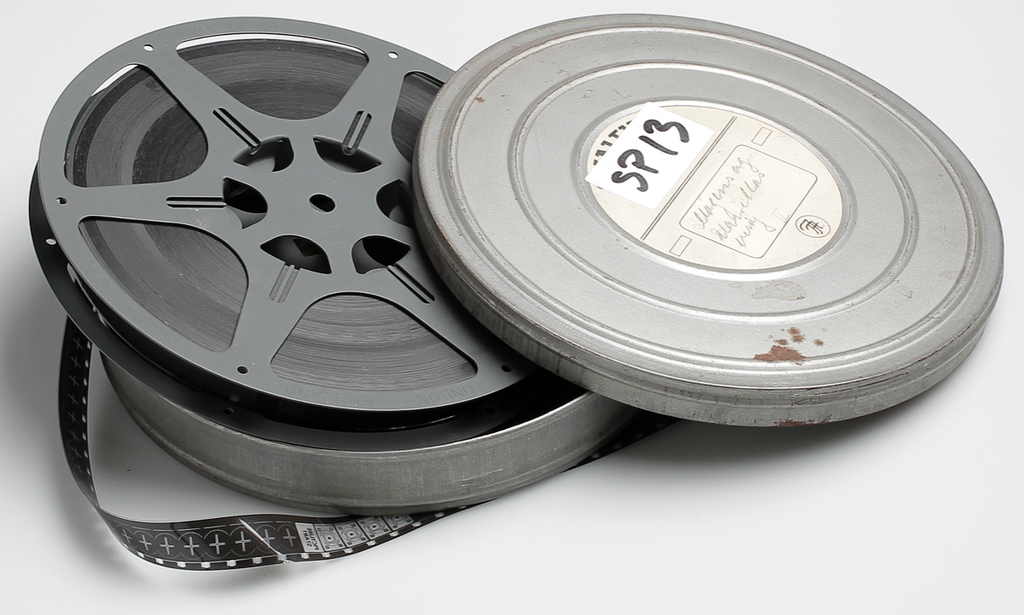
If you discover an unfamiliar reel, start by looking at the width of the film itself. At 16 millimeters, it is noticeably wider than 8mm or Super 8 film but much narrower than 35mm motion-picture film.
You may also find labels identifying the film as 16mm on the reel, canister, or original packaging. Keep in mind that reel diameter alone is not a reliable way to identify a format, since different film widths can be wound onto similarly sized reels.
Can You Convert 16mm Film to Digital?
Yes. EverPresent digitizes 16mm film, helping families and organizations preserve footage that might otherwise remain inaccessible without specialized projection equipment.
Our film transfer process captures individual frames digitally rather than simply recording a projected image. This allows old footage to become digital video files that are easier to watch, share, and preserve.
If you have 16mm reels alongside Standard 8mm or Super 8 home movies, EverPresent can help you identify the formats and plan a digitization project.
Learn more about EverPresent’s film reel digitization services, or contact our team at 866-363-3351 to discuss your collection.