

If you grew up watching family movies projected onto a living room wall, there’s a good chance some of those memories were captured on Super 8 film. Introduced in the 1960s, Super 8 made home movies easier to shoot and helped generations of families document everything from birthdays and vacations to weddings and everyday life.
Although it looks similar to Standard 8mm film, Super 8 introduced several important improvements that made amateur filmmaking more accessible. Here are a few interesting facts about this popular home-movie format:
- Super 8 film was introduced by Kodak in 1965 as an improvement over Standard 8mm film. Its redesigned cartridge system made loading a camera much easier, eliminating the need to manually thread and reverse film during recording.
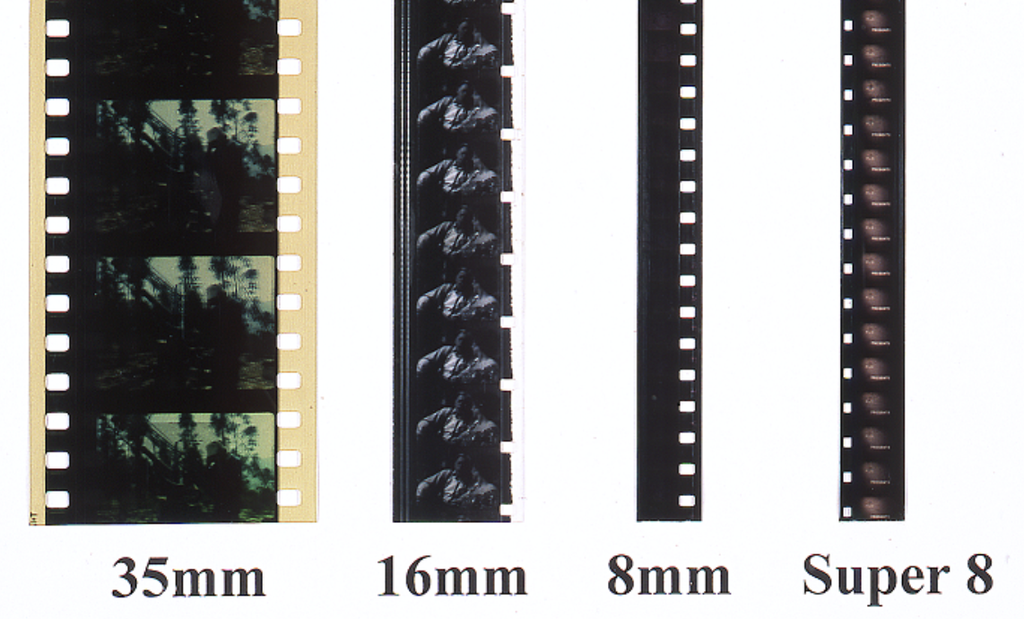
- Super 8 and Standard 8mm film are both 8 millimeters wide, but their sprocket holes are different sizes. Super 8 has smaller perforations, allowing more space for each image frame. This generally produces a larger picture area than Standard 8mm film.
- The most common playback speed for Super 8 home movies is 18 frames per second. Some cameras also offered 24 frames per second, particularly for more advanced filmmaking. Correct playback speed is important when converting film to digital so that movements appear natural.
- A standard 50-foot Super 8 cartridge holds approximately three minutes and twenty seconds of footage when recorded at 18 frames per second. At 24 frames per second, the same cartridge captures approximately two and a half minutes.
- Super 8 became one of the most popular home-movie formats of the 1970s and 1980s. Its simple operation, relatively affordable equipment, and improved picture quality made it a favorite for documenting family milestones and everyday activities.
- Some Super 8 films have sound, but many are silent. Sound-capable Super 8 cameras and cartridges became available in the 1970s, using a magnetic stripe along the film. Silent Super 8 remained common, and many surviving home-movie reels have no accompanying audio.
- Super 8 film is still manufactured today. Kodak continues to offer Super 8 film stocks, and the format remains popular among artists, independent filmmakers, and enthusiasts who appreciate the distinctive appearance of analog motion pictures.
- Super 8 film should not be confused with Video8 or Hi8 videotapes. Despite their similar names, Super 8 is photographic motion-picture film, while Video8 and Hi8 are magnetic videotape formats that require entirely different equipment for playback and digitization.
How Can You Tell If You Have Super 8 Film?
The easiest way to distinguish Super 8 from Standard 8mm film is to examine the sprocket holes along the edge. Super 8 has smaller, more rectangular perforations, while Standard 8mm has larger holes. The image frames on Super 8 are also slightly larger.
You may find the words “Super 8” or “Super 8mm” printed on the reel, original cartridge, or storage box. If the film has already been transferred onto a reel, don’t assume that the reel’s size identifies the format. Both Standard 8mm and Super 8 film can be stored on reels of similar dimensions.
Can You Convert Super 8 Film to Digital?
Yes. EverPresent specializes in converting Super 8 home movies into digital files that can be watched on modern devices, shared with family, and preserved for future generations.
Rather than recording a projection of the film, our specialized equipment captures the individual frames digitally. This approach helps preserve the original footage without relying on an aging home projector.
If your collection contains a mixture of Super 8, Standard 8mm, and 16mm film, our team can help identify the different formats and determine the best approach to digitizing them.
Learn more about EverPresent’s Super 8 film conversion services or call 866-363-3351 to get started preserving your home movies.