
When most people hear “35mm film,” they think of traditional photographic negatives or slides. But 35mm is also one of the oldest and most influential motion-picture formats in history, responsible for bringing countless movies to theater screens around the world.
Unlike the smaller film formats commonly used for home movies, 35mm motion-picture film became the professional standard for cinema. Although EverPresent digitizes many types of home-movie film, we do not offer 35mm motion-picture film digitization. Understanding the format can still help you identify what you’ve found and determine how best to preserve it.
Here are a few interesting facts about 35mm motion-picture film:
- 35mm film became a motion-picture standard in the late nineteenth century. Its widespread adoption was closely associated with early motion-picture technology developed by Thomas Edison, William Kennedy Laurie Dickson, and other cinema pioneers. The format went on to dominate theatrical filmmaking for more than a century.
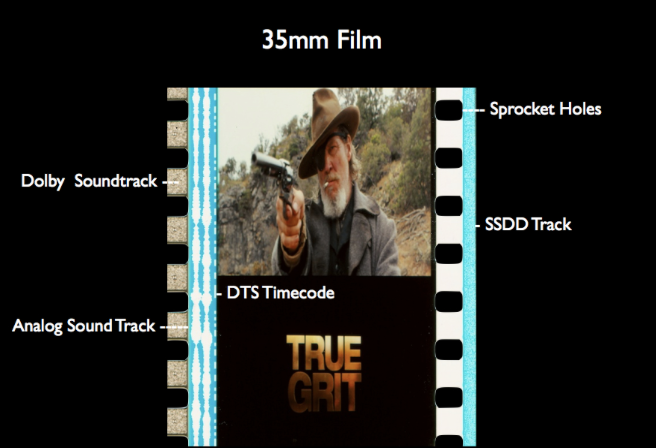
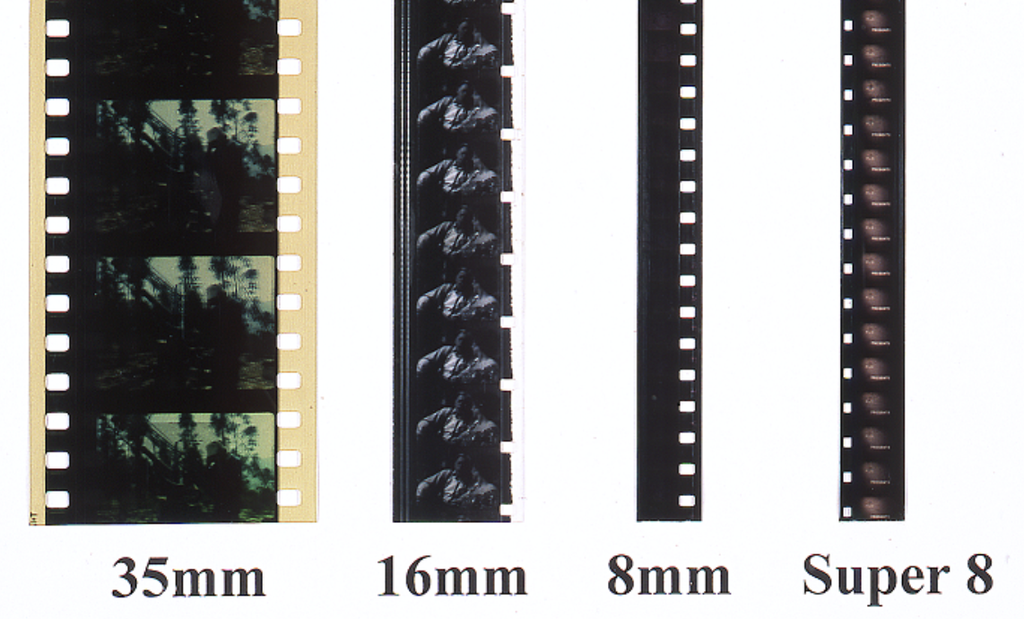
- 35mm motion-picture film is 35 millimeters wide, making it substantially wider than 16mm, Standard 8mm, or Super 8 film. Its larger image area allows for high levels of detail, making it well suited to professional filmmaking and theatrical projection.
- The standard playback speed for theatrical sound films is 24 frames per second. Earlier silent films were often recorded and projected at varying speeds, sometimes significantly slower than modern sound films.
- 35mm film was used for everything from early silent movies to major Hollywood productions. Although digital cinema has largely replaced traditional film projection, some directors and cinematographers continue to shoot on 35mm for its visual characteristics.
- A typical 1,000-foot reel of 35mm film contains approximately 11 minutes of footage when running at 24 frames per second using the conventional four-perforation format. Feature-length films were traditionally distributed across multiple reels.
- 35mm motion-picture film can contain soundtracks alongside the images. Depending on the film’s age and production, these may include optical analog soundtracks or information associated with digital cinema sound systems.
- Not all 35mm film is intended for motion pictures. The same nominal film width is widely used for still photography, including photographic negatives and mounted slides. These are different from motion-picture reels and require different digitization methods.
- Professional 35mm film preservation requires specialized equipment. Film condition, shrinkage, perforation damage, and the type of film stock can all influence how a reel should be handled and scanned.
How Can You Tell If You Have 35mm Motion-Picture Film?
Start by examining the film’s width and how it is stored. A 35mm motion-picture reel contains a long strip of film with sequential images that create movement when played back at the correct speed.
Unlike 35mm photographic negatives, which are commonly stored in short strips or individual frames, motion-picture film is typically wound onto larger reels or stored in film cans.
The presence of multiple consecutive images showing small changes in movement is another indication that you’re looking at motion-picture film rather than a collection of still photographs.
Does EverPresent Digitize 35mm Film?
EverPresent does not digitize 35mm motion-picture film. These reels require specialized professional film-scanning equipment outside the scope of our film transfer services.
However, we do digitize several other motion-picture formats, including:
- Standard 8mm film
- Super 8 film
- 16mm film
We also digitize 35mm photographic slides and negatives, which are often confused with 35mm motion-picture film because they share the same film width.
If you have 35mm slides or photographic negatives, EverPresent can convert those individual images into digital photographs. If you have 35mm motion-picture reels, you’ll need a service that specializes in professional motion-picture film scanning.
What If You Have a Collection of Different Film Formats?
It’s not unusual to discover multiple formats stored together, particularly in family archives or collections that span several decades. A box labeled “old film” might contain Super 8 home movies, 16mm reels, 35mm slides, and photographic negatives.
Identifying each format before beginning a digitization project can help you determine which materials can be transferred together and which require specialized services.
While EverPresent cannot transfer 35mm motion-picture reels, our team can help you understand the other formats in your collection and explore options for preserving them.
Learn more about EverPresent’s film reel digitization services and 35mm slide and negative scanning, or contact us at 866-363-3351 with questions about your collection.