

The Finest Photo Scanning and Video Transfer Services in New York
30 Years Experience from VHS to DVD to 35mm slide scanning
100,000+
130+
locations
90,000+
converted per year
90+
employees
4 million
scanned per year
Why ship your aging mementos overseas or across the country for VHS to digital services and photo scanning services when there’s an easy and affordable local option right here in New York?
We have dozens of different neighborhood locations for expert digitizing services throughout New York. If you’d prefer a home pickup, we drive to all of New York’s 62 counties, and we’re happy to do a Zoom consult to help you prepare. We believe preserving history is important, and we aim to make it as easy as possible for New Yorkers to get the digital transfers done right.
Our 60+ person technical team has tens of million of scans behind them, and we make sure you’ll only have to do this digitizing project once. EverPresent is 100% devoted to this mission, and we would be honored to help you with this project whenever the time is right for you.
Digitizing services offered to our New York clients

Photo Scanning Service
Our scanning is at 600 DPI high resolution on professional-grade scanners. Whether scanning photos, frames, letters or oversized items, everything is cropped, oriented, optimized, labeled and kept in order.
Album & Scrapbook Scanning Services Available in NY
Our expertise here is nationally recognized. We scan the delicate albums other companies won’t touch. All photo albums are returned as they were once scanned, and you may pick from full-page scans or individually cropped images.
Slides To Digital
35mm slides and negative scans are most common, but we are also capable of scanning rare format transparencies like 220s, 127s, glass plates, stereo slides and more. Scanning up to 4,000 DPI includes dust removal and optimizing.
Video Transfer Service
Our video tape transfers are clean and predictably and affordably priced. We digitize tapes to DVD or USB, including VHS, Hi8/8mm, MiniDV, Beta and more. All video to digital files are Mac/PC compatible.
Audio Transfers Services Available in NY
Reel-to-reel audio and cassette tapes are the most popular choices for digital transfer, but we can also transfer vinyl, DAT and other audio formats. Audio correction is included, and you may choose .wav or .mp3 files to CD or USB.
Film To Digital
Film reels are captured on custom made transfer machines at up to 2K HD. We can deal with moldy reels, damaged reels or reels with sound for 8mm, Super8 and 16mm home movie film transfers. Digital files are available on DVD or USB.
Digital Organizing
Your entire digital media collection, de-cluttered, de-duplicated, and organized by our professional digital organizing technicians.
Unique Photo Book Design
Custom crafted and fully personalized photo book designs. Work directly with a designer with as much or as little involvement as you like.
Premium Event Slideshows
Slideshows combining a custom selection of photos, videos, music and more; personalized for any event by our team of expert designers.
Expert Video Editing
Turn hours of raw footage into something even more special. Perfect for creating highly videos, family documentaries and more.
3 Options to Start your NY Digitizing Project
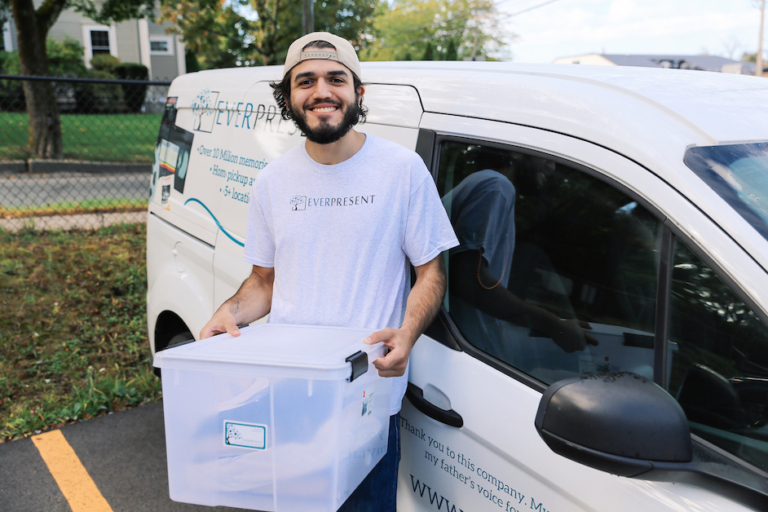
HOME PICKUPS
Too many boxes to move on your own? Complimentary home and office pickups are offered throughout the East Coast for projects over $300.
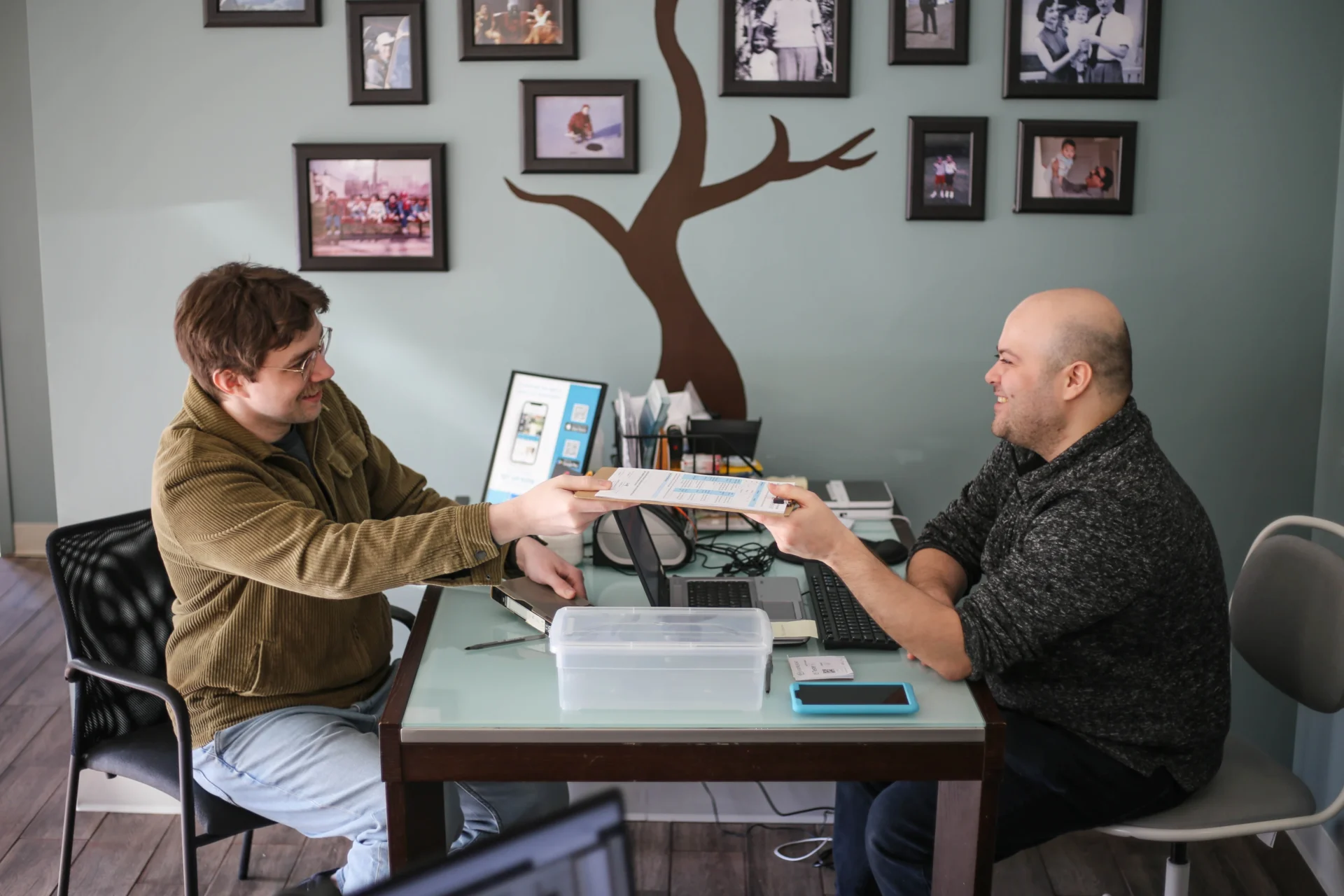
LOCAL DROP OFFS
130+ locations available for convenient drop-off. See which store is closest to you. Our drivers personally transport projects to our local lab for digitizing.
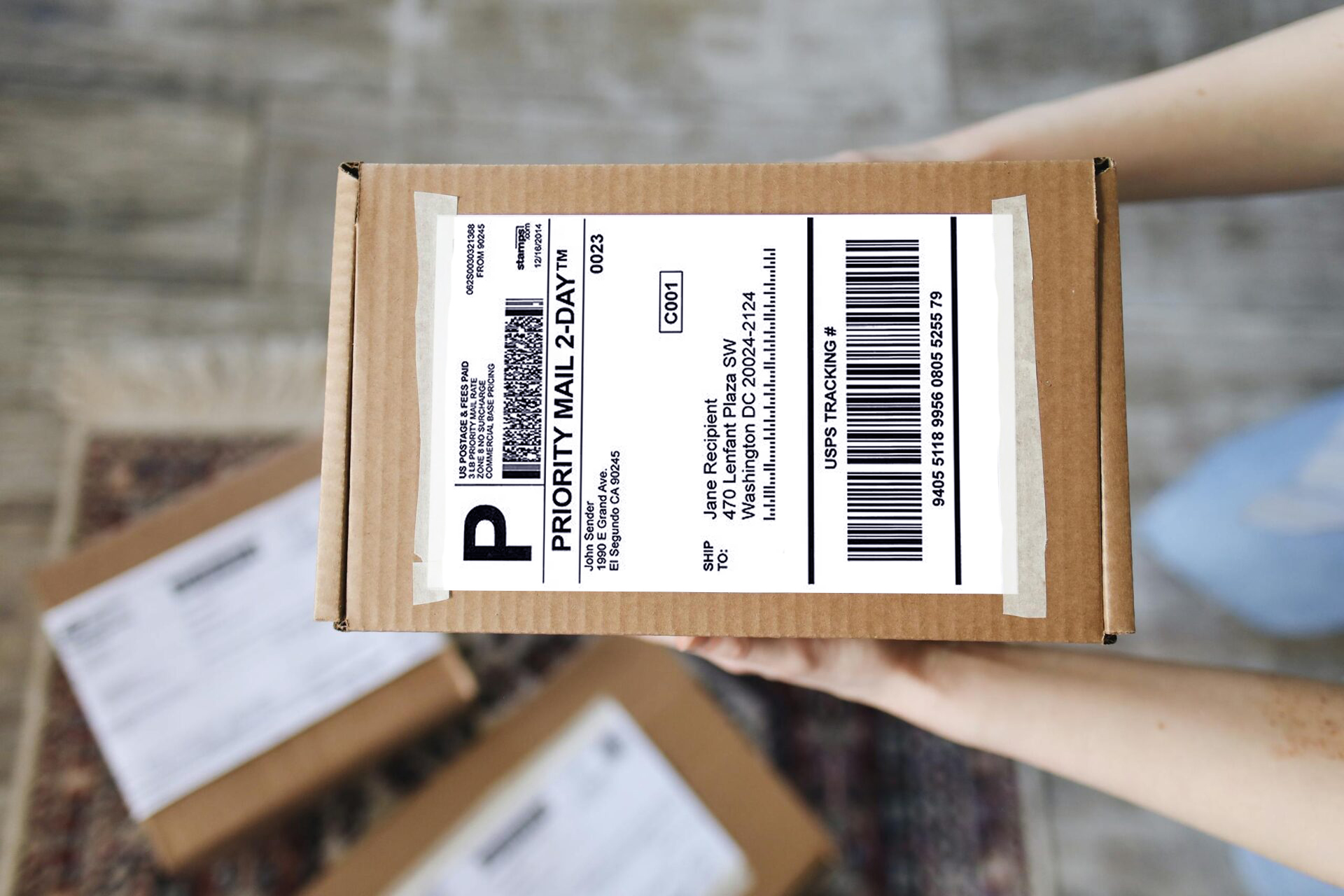
FREE SHIPPING
We accept mail-in orders from across the U.S. We’ll email a pre-paid UPS label or apply a shipping credit if you ship on your own.
NEW YORK DIGITIZING DROP OFF LOCATIONS
New York
5 star rating from Satisfied New York Clients
New York Home & Office Pickup Service
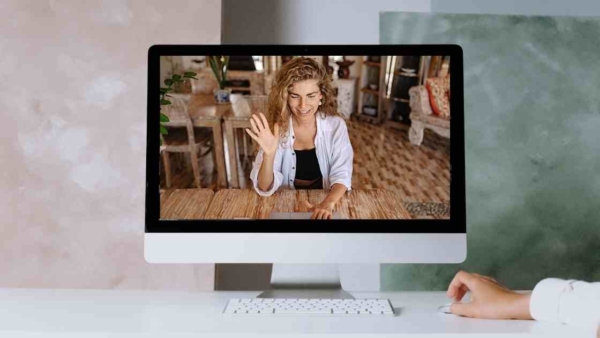
Safe, doorstep pickups with optional Zoom video prep sessions
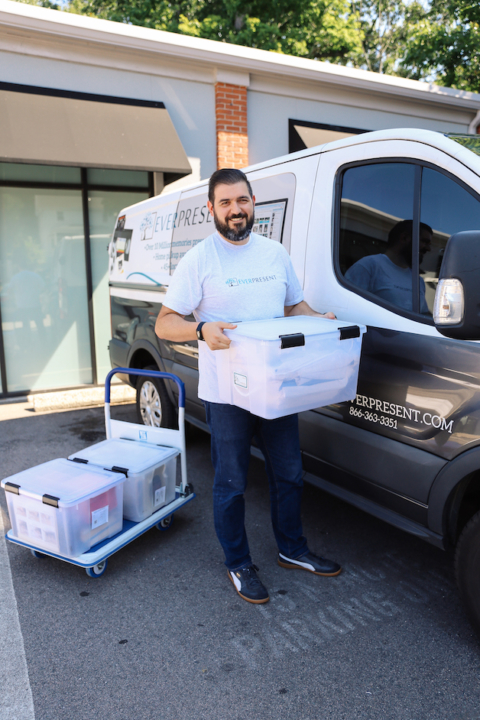
Many families have dozens of boxes or tubs of photo albums and VHS tapes. They can be hard to lift and challenging to organize. For many, having us visit their home to the heavy lifting makes all the difference, and we’re thrilled to do it. Doorstep pickups are easily scheduled by clicking the button below. You will get a call before your appointment where you can let us know exactly where you left your project (doorstep, porch, etc) and we will safely pick it up. Everything is packed in weatherproof bins and barcoded before being taken to our state-of-the-art lab for processing.
Once we have your photos and videos in hand, we do a detailed inventory and a phone session to make all of the decisions about the scanning process. But if you’d like to get a bit more prepared upfront, let us know and we’re happy to do a Zoom based virtual organizing session. One of our senior consultants will schedule a Zoom call with you to offer their expertise and to simplify the process of organizing and preparing for digitizing. Afterward, we will schedule a doorstep pickup to safely take the material to our lab and bring it back when the project is wrapped up.
NEW YORK STATE’S IMPACT ON MODERN VISUAL MEDIA
New York, the birthplace of American photography, saw the first commercially available camera, before the invention was even presented to the world.
Photography wasn’t always considered an art form. From experience in document scanning, we know that newsletters can be an easy way to circulate important information and milestones. Alfred Stieglitz, the VP of the Camera Club of New York, knew that these types of publications could be an important tool too. He turned the club’s newsletter into a world-renowned photography magazine and used it as a platform for his articles highlighting why photography should be considered art.
The first US-manufactured 35mm film camera was developed in Rochester, New York, by a little company called Kodak. The Eastman Kodak Company dominated the photography industry for decades, on the forefront during the advent of film. Kodak gained major success by providing accessible photo materials. The brownie camera, introduced in 1900, was what really put photography on the map to consumers. Reversal film (aka slide film) was also invented by the Kodak company (1935). By the 1970’s Kodak dominated the market, selling 90% of the film in the US. Kodak actually patented the first digital camera in 1975, but did not pursue it at first, in fear it would compete with their primary business.
The Eastman House in Rochester, NY preserves the life and legacy of the man who changed the face of visual documentation, George Eastman. When we are scanning slides and negatives, we are very grateful for Kodak’s contributions and inventions to making photography accessible to everyday people. Think of how many fewer photos we would have of our families without portable cameras and slide carousels!
The Strand Theater in Manhattan was believed to be the first theater built specifically to show movies. The lavish theatre in NYC was built in 1914 for $1 million, when a chain of cinemas was being constructed and stood until the late 1980s. It is regarded as being the first place specifically made for the sake of watching and showing moving pictures. Unfortunately, hardly any movies that would have been shown here have survived in their original format (usually 35mm); a study shows that less than 75% of films made between 1912 and 1929 still exist today. The bright side of this rather bleak study is that it has encouraged preservation, archival research, and digitization of films created during this important and formative time of cinematic history.
Alumni of a New Rochelle High school became a famous photographer after being drafted for the war. Only months after graduating from Isaac E. Young High School, Tony Vaccaro was drafted for World War II. He took many photos both during and after the war, then built a career as a commercial magazine photographer of celebrities and fashion.
A photograph of a blind woman on the Lower East Side predicted the birth of the street photography genre. While taking his images on the crowded streets of New York, Paul Strand’s deceptive camera allowed him to take truly candid images; his camera had a false lens that pointed in a different direction than he was photographing. His 1916 image of a homeless woman selling newspapers on the street is one of the most well known and influential images in photography and earned Strand the credit of fathering street photography.
One of the first uses of photography for political propaganda popped up from a studio on Broadway. On his way to deliver his Cooper Union Address, a speech which lent a heavy hand in his bid for president, Abraham Lincoln stopped by Mathew Brady’s photography studio. The photo taken that day appeared in magazines, posters, and pins, setting the future president’s image, and paving the road of his successful campaign. Mathew Brady photographed 18 presidents, and his photographs of Lincoln were used to model the $5 bill and the penny.
The New York Film Harmonica is partly responsible for why movies now have sound. When audio was finally able to be synced with moving pictures, it seemed to most critics like an expense that would not yield many rewards. However, in 1926 Warner Bros. screened a movie with a score performed by the orchestra to rousing reviews. Because of its rave ratings, WB continued to produce movies with sound from then on. In the following years, other corporations began to follow suit, and the rest is history. You can identify whether your 8mm and 16mm video reels have sound or not using this video.
The first motion picture was supposed to be shown in New York City, but the man disappeared… Louis Le Prince shot some of the first motion picture films on an invented the motion-picture camera and was set to show the footage in New York City, but he disappeared while traveling. The exhibition never happened because of this, and his work wasn’t known until many decades later.